Search This Blog

Wednesday, August 7, 2013

Pantry Essentials, Garden Activity Diary

The bulk of our day was taken up with checking cattle, setting up and adjusting the irrigation and some more fencing. With the cattle we did a complete audit of all of next door's herds which took a little extra time but the dogs enjoyed the extended walk. We did manage a few odd jobs about the house but were interrupted by a call from a concerned neighbour down the road. A calf seemed to be isolated from the herd of 7 on the river. A quick trip and the calf was reunited with its mother.

We all have different pantry essentials that we keep in stock to ensure a nourishing meal can be prepared. Our list is broken into two groups. The first is "The Basics" which are ingredients used in almost every dish to build flavour and texture. Each list was compiled by looking in the refrigerator and the pantry and listing those items which were either used daily of at least a number of times each week. This is the first list.

List #1 - Basics

Olive oil - used everywhere, cooking, dressings, oiling the butchers block, remedies.

Stone ground flour - The BD grains are ground as needed and used for sourdough bread, pasta and coatings.

Tomato Puree - Sauces, stews any dishes needing tomato flavouring.

Tomato Dried - These are kept in Olive Oil and blended with the Puree if a more intensive flavour is needed. Also finely chopped and added to salads when fresh tomatoes are out of season.

Fish Sauce - A little in almost any dish adds another dimension. The secret ingredient.

Salt - Mostly used for cheeses but Sauerkraut needs a little. Rarely used in cooking that is the job of Fish Sauce. But you can't beat salt sprinkled on freshly picked Tomatoes and Cucumbers.

Pepper - On some foods this just makes a huge difference. Socca is nothing without its Pepper.

Pulses - What would we eat on our fast evenings if there weren't beans and lentils. And no chickpeas means no Socca. Some of the most nourishing Winter dishes start with these.

Vinegar - Tossing up whether to include this one. Yes it is useful but you can get away with a Lemon or Lime but then if preserving or cleaning this I suppose is mandatory.

Garlic - Other than ice cream in what dish wouldn't you use this.

Onion - As above but vary the cut depending on what needs to be achieved e.g. finely chopped for cooking, rings for frying, half rings and thin for salads.

Ginger - Now here's one that can be included in ice cream.

A useful tool for gardening is recording when certain activities are performed. Our journal has two types of pages. Each double page is either a "Month" summary or a "Week List" At the commencement of every month is listed essential tasks that must be finished that month e.g. in July shallots must be planted. Each of the subsequent double pages is allocated to each week of the month where details of major activities is recorded. The pages are added to every year building up a multi year log of activities. Useful in tracking when the first Tomato is harvested, how many years the Asparagus has been in the ground etc.

Everything is recorded in pencil to allow for corrections.

Monthly Activity Page

Weekly Tasks Completed Page

Tuesday, August 6, 2013

Pumping Water, Sauerkraut Taste Off

Just the usual chores with cattle this morning although now only checking two herds for births of which there was one over the river. The westerly wind stayed all day and the boss over the river asked to have some paddocks watered that he had fertilized at the weekend.

The property over the river now has underground irrigation pipes extended throughout the 80 acres. Dragged out the irrigator and set it up in paddock #1 which will require two runs od about 200 metres with a 50 metre spread. The second run will do half of paddock #2. That means only three runs in total then a relocation to do three paddocks down by the river. Each 200 metre run takes about 15-20 hours. The speed depends on how often the hose is adjusted. The irrigator drags the hose as it goes. The longer the section behind the irrigator the slower it gets. Usually an early morning start with an adjustment at midday and on dusk will get the run done in 15 hours otherwise its a slower run and more water.

Coincidently we needed to pump up some water from our dam as the holding tank was close to empty and with the winds the gardens needed a light water.

Started the oldest pump first. This ancient Honda engine is about 20 years old but still keeps working despite blowing huge amounts of smoke for the first 10 minutes. We have had another commonly known brand as the second unit but it packed it in within 5 years and was replaced by another Honda. Can't speak highly enough about this brand. Easy to start and indestructible.


The 20 year old Honda engine blowing a bit of smoke at the beginning but running well

The newer backup Honda and piston pump
As there was no rain forecast both pumps were started which will fill the 5000 gallon tank over the next 6-8 hours. We use piston pumps because of the simplicity of repair and maintenance.

Speaking of maintenance, to save walking 500 meters back up a steep hill to the workshop a small waterproof toolbox is kept with the pumps. It contains all the tools needed for these engines and pumps as well as the spare parts for maintenance and quick repairs. Usually the only repairs is a replacement of the leather cups.

A few tools, spares and a rag for clean up


Aging and rust covered toolbox but still waterproof.

The only other item needed at the dam is a mode of transport if the inlet pipes need any work. The last time it was used was about 6 years ago when new flotation drums were put on the inlets. 

Rather large but it was cheap second hand.

Flotation drums and you can see the inlet pipes vibrating which demonstrates all is as it should be


Used up the sauerkraut in the kitchen refrigerator this morning. It was time to taste test some of the Nourishing Traditions batches that were stored in the spare refrigerator.

Latin American:
Ok but nothing flash to distinguish it i.e. not as spicy as a Kim Chi. May need to play with this one a bit.

Japanese:
The soy sauce comes through which gives it a distinctive taste. OK but again nothing flash.

Plain with Caraway:
Good texture and the Caraway really adds good distinction. My pick of this bunch.

Korean:
Tastes like Kim Chi. Good background heat and texture. Ok.

No complaints about any of them, all acceptable. Possibly our taste buds are more attuned to stronger flavours.

Monday, August 5, 2013

Seedlings for Spring, Who Knows How to Germinate Capsicum and Eggplant?

An interesting morning (for us). Across the river the boss rang yesterday (Sunday) and said he was heading back to Sydney "Don't worry about rushing over tomorrow morning, none of the cows look close to calving". Arrived at 10 am to find two new calves and a third on the way! As my dairy farmer used to say when asked when the Springers were due? "Sometime in the next three weeks" was the standard answer.

Spent some time ear tagging the newborn and then slowly moved all the new mums into a fresh paddock (now that we have a mini herd of 10) and set up a grazing strip in an adjacent paddock with a good crop of Rye and Clover. Only a small strip to start and gradually increasing their quality and volume of feed as their stomachs adjust.

On the neighbour's property next door the herd of 7 on the river have all had their calves as of this morning. A gate to a new paddock with some greener feed was opened and some relief for us as we now only have to check them every few days instead of daily. Up on the Hill only 11 of the 16 have calved.

The Tomato seeds we planted have all germinated and have now been all transplanted in larger pots. They have started to fill out and all is looking good for a Spring planting.

Transplanted Tomato Seedlings

The only problems have again been with the Capsicum and Eggplant seeds. Only one Capsicum has germinated. What is the matter? We have this problem every year. Does anyone have any suggestions?

The morning went quickly with cattle work leaving the afternoon for a period of intensive weeding. With surprise that went well with most of the weeding complete by nightfall. Only one bed to finish tomorrow. The fine Lucerne mulch (ex the mulcher) has worked well and only the edges of the garlic stands had to be tidied. Will try to make some more fine mulch material tomorrow and get the onion stands mulched.

The beauty of having plenty of composted material on hand was that generosity could be extended to any plants that were a bit slow in maturing. A few Carrots, Beetroot, Spinach and Pea plants needed a little lift.

With the westerly winds blowing all day things were drying out and needed a solid water on dusk when the wind stilled for half an hour. Will need to pump up again tomorrow - thank you 7 mega litre dam you are a life saver.

Sunday, August 4, 2013

Hungerfords, Spiced Macadamia Nuts

A quiet day inside today taking time to do all the end of month accounts. Made up and e-mailed out the invoices for the work performed and then completed the monthly BAS statement. Most small business do their Business Activity Statements quarterly but we have chosen to do ours monthly. It only takes a few minutes in our small operation. Any outstanding bills are paid and then the paperwork filed ready for the end of year tax return. Any claimable deductions added to the BAS are also filed. When the end of financial year comes around it only takes a little while to summarise everything for the accountant who prepares the annual tax returns.

In the background a big batch of yogurt was on the stove. Normally the cream would have been removed and used for cultured butter but this time the cream was added back. About a month ago a batch of full cream yogurt was made and it was so delicious it seemed a good idea to try it again as there was an ample supply of cream. Of the 20 litres half the milk was used for yogurt and the other half for drinking. That left over about a litre of cream for other uses as we were happy to use skimmed milk in our teas and coffees and the dogs and cats don't notice the difference.

Two litre storage container and a one cup measuring tool

Overnight the cream has risen to the surface

Skimming the cream with the measuring cup.


And yet another comment on books. A long time ago when living in a remote valley a decent distance away from veterinary assistance we purchased a copy of T. G. Hungerford's  Diseases of Livestock. This was a very expensive book back then and is still pricey. But it was the best book on livestock we have ever found especially when it comes to diagnosis of ailments. Back then we had cattle, horses, sheep, pigs, chickens, ducks, geese, dogs and cats. This book covered it all. We still use it today and it is especially useful it researching background detail about a specific problem.

Having come across a recipe to spice up the flavour of Macadamia nuts it was time to process some harvested nuts.


Macadamia Nuts stored in drying trays


Hand operated cracker


Step one removes the husk

Step two cracks the shell

Roasted nuts
 
Came across this recipe by Karen Martini in the Sydney Morning Herald Good Food supplement. The original recipe included two types of nuts the other being Almonds. The only modification in hindsight would be to half the Macadamias. That way the flavours are spread over a bigger surface area. Other wise this recipe is delicious as a snack or as is suggested in the original recipe sprinkled over Pumpkin soup.

Garlic 2 cloves minced
Ginger 2 teaspoons finely grated
Curry Powder 1 teaspoon
Salt (flakes) 1 tablespoon
Tamari 4 tablespoons
Sesame seeds 40 grams
Macadamia nuts 360 grams

Roast the Macadamia nuts and Sesame seeds for 10 minutes in an oven at 180 degrees C
Toss with the mix of other ingredients
Roast for another 10 minutes.

If the mix seems a bit dry you can add a little water or even olive oil before the second roasting to assist the ingredients to adhere to the nuts.


Saturday, August 3, 2013

Things in the Garden, Cooking Inspirations

After morning chores took a stroll through the garden to see how things are progressing. Still lots of food ready to eat and more on the way - thank goodness we won't starve.

Broad Beans on Target

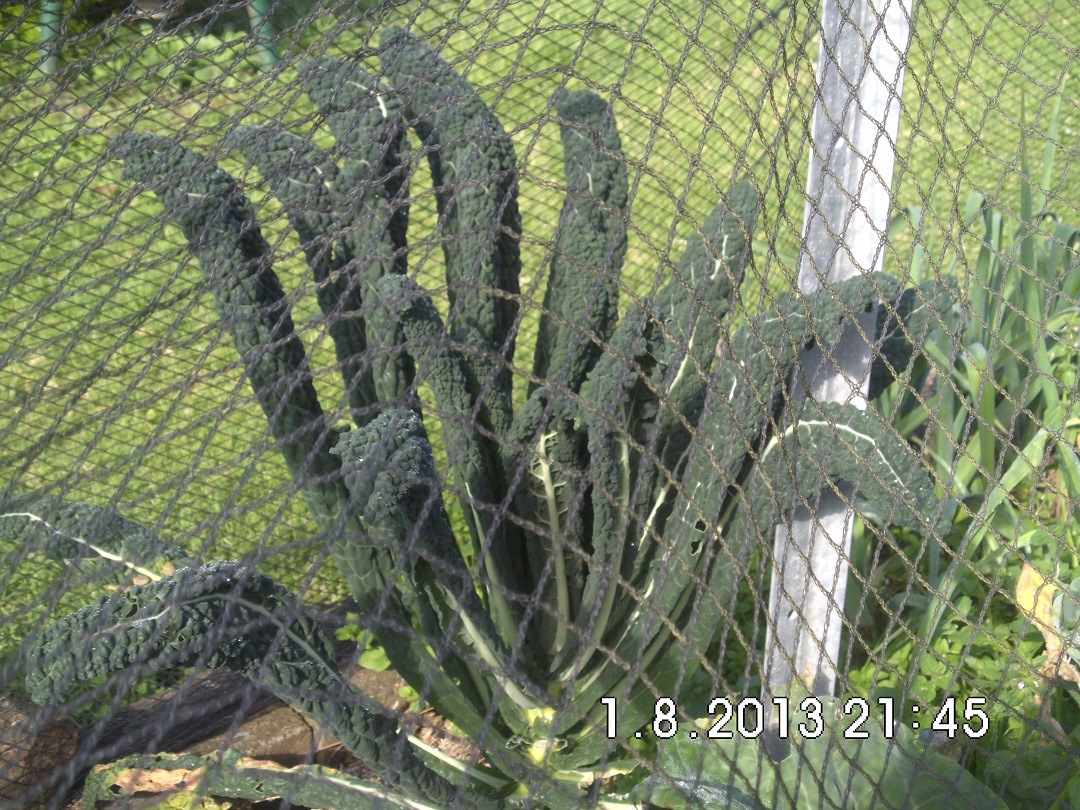
Kale

Garlic looking very healthy

Self Sown Fennel. Let it go to seed once.

Two of the many Self Sown Radicchio. Again let it go to seed once for a permanent crop

Celery

Coriander Flowering. When the seeds are still green and soft they will be used in various dishes to add flavour and crunch

Flowering Jasmine "Gladdens your Heart"
In some commentary on another blog, readers referred to inspirational books on cooking that had set them on the path to getting serious about preparing their own food. This was reminder of a few of the books that set the scene for our cooking.

Back in the early 1980's a passing acquaintance hearing we were about to prepare a special meal for friends loaned us Elizabeth David's French Provincial Cooking which was used to prepare an authentic French feast. Although not as easy to use as Julia Child's books it nonetheless forced some discipline in preparation and delivery and brought us into the world of French cooking and cooking for pleasure. Ten years later we acquired the box set of Elizabeth David's books but took out the pristine French Provincial Cooking and gave it to the stunned acquaintance who had forgotten that we never returned her loan. The dog eared stained original still holds a special place with us.

Not long after that The Cuisine of Paul Bocuse joined our shelves and brought creativity to the kitchen. Over the years cookery books accumulated on our book shelves, some just for their prettiness, others for specific recipes or techniques still used and others just because they were about cooking. When hunting for something new to do with a vegetable in over supply it's not unusual for us to sit with a dozen rarely opened books over coffee examining alternatives. Sharing the discovery process is not as easy on the web as it is with the hard copy.

Friday, August 2, 2013

Cleaning Milk Collection Container, Spare Trailer Tyre

Good day for young mothers. Two new calves across the river, almost 30% of the 25 have calved. Up on the hill out of 16 we have 9 new babies with the new one today. On the river out of 7 expectant mothers 5 have calved counting the new one this morning. The new one on the river almost looked liked it may be orphaned. The mother hadn't licked it clean and for a while there wasn't all that much interest. We checked it several times during the day hoping we didn't have to drive them into a neighbours yards for a bit of force feeding but by the end of the day all seemed reasonably well. Will monitor this one for a while.

We had a busy day going into Dungog to repair a tyre for the trailer and using the trip to visit the Op Shop, Dump Shop, Produce Merchant, Library and nursery whilst the tyre was being repaired. We are looking at building an egg incubator and were perusing the recycling places for some components. Picked up another spare tyre and rim for the trailer at the dump for $5. It was in the same condition as the one being repaired. The repair cost $22.


$22 Puncture Repair

$5 Recycled
 A busy finish to the day putting out silage across the river and ear tagging 2 new calves before collecting some oysters at Karuah. Had a long chat with the two oyster farmers about a recent conference they attended. A lot of changes in the industry with tradition making way for more efficient growing and harvesting techniques. The worst news was the move to breeding disease resistant varieties and rather than gathering naturally spawned stock the move is to breed stock for supply to the farmers which could result in a reduction in genetic diversity. Our farmers plan to stick to the traditional methods as it is lower in cost and although harder work quite profitable.

After collecting oysters there was a stop off at the dairy farm for milk which brings us to the title of this blog. The container for milk collection is a food grade 20 litre plastic drum. After emptying the milk into a 25 litre stainless steel pot the cleaning method is as follows.

Rinse the drum with cold water until the water runs clean.
Put in a couple of litres of hot water and a little detergent.
Shake vigorously and empty out the soapy water.
Rinse again with cold water until all the suds are gone.
Leave about half a litre of cold water in the drum.
Put in about a tablespoon of Sodium Metabisulphite and shake.
Store container and just rinse out before use.

Since using this cleaning technique there have had no contamination issues and the process is exceedingly fast.