Search This Blog

Showing posts with label Bottling. Show all posts

Monday, October 7, 2013

Sourdough Biscuits and other things

Being a public holiday meant the owners across the river were onsite and we had a day off.

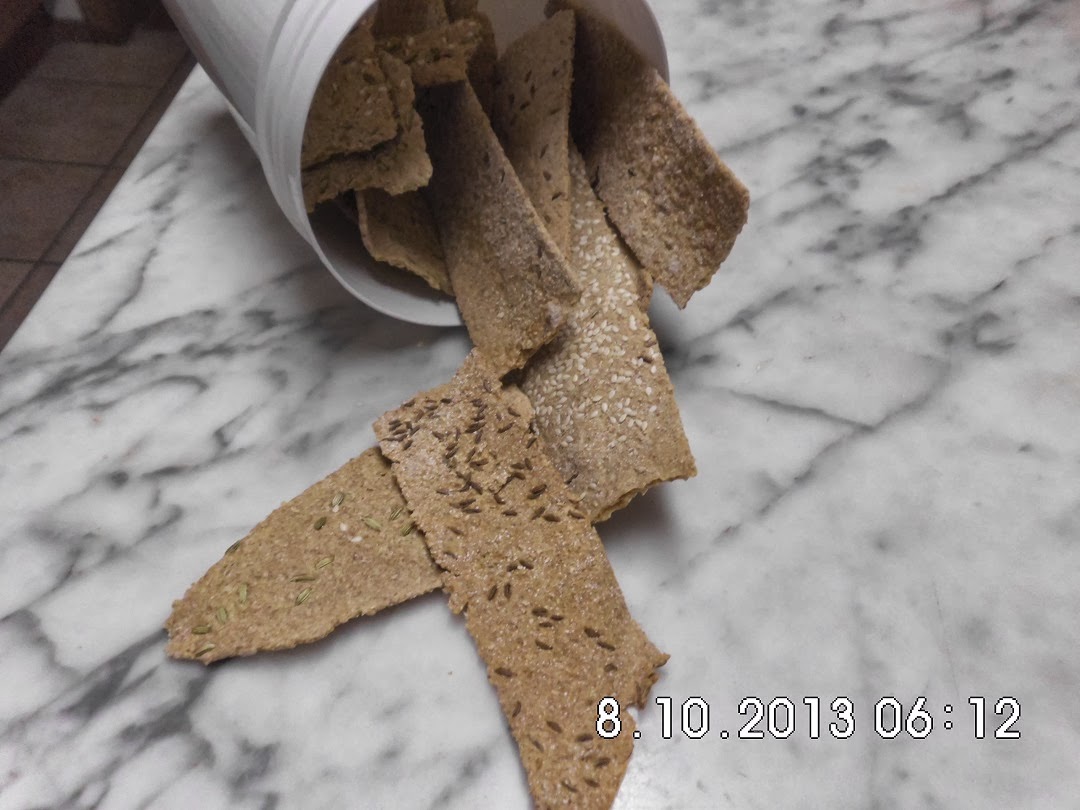
Jean had put together a sourdough bread but it failed to rise which meant rather than feed it to the chooks I turned it into savoury biscuits. Plain, Fennel seed, Sesame seed and caraway.


Went down to the workshop yesterday to run the generator for 20 minutes - a monthly chore to ensure it is working. Rather than move it outside I started it in situ but it would only run for a minute and conk out. Today with more time it was dragged out into the light and the air filter checked for mud wasp nests, the fuel bowl drained and cleaned and a thorough overall check. It was then I noticed the fuel on/off switch was in the off position. It ran well after that.

Harvested some more coffee beans and at each opportunity spent a little time shelling the previously dried beans. This is a tedious job but I'm committed to making at least one batch of our own coffee. Finished the shelling while watching a Annabel Langbein DVD that evening.


As usual, it is Monday and a fast day all day from our morning tea/coffee until dinner time. That doesn't prevent us from doing a dozen laps in the pool, 30 minutes of Aquarobics and a HIT session.

With the moon still in the right place bottling continued with another 4 dozen bottles. This time it was 36 litres of Petit Verdot. We had a bottle with dinner in the evening (what diet?) and found it really very good as a varietal. It is normally blended with other varieties but we prefer the unique individual flavours. So we aren't connoisseurs.

The weather continues to be dry and we have started the watering program again with both pumps working on the dam. I never have a problem with them as I don't turn off the fuel.

Some weeks a go we were given a largish pen which had been used to house broody hens and thus get them out of the busy laying boxes. The mesh in parts was badly rusted and today we finished replacing all the damaged sections. It now just needs a little rust proof paint and will be ready for action.

Sunday, October 6, 2013

Wine Bottling Time

Having experience some weeks of high temperatures we are pretty sure the red wine remaining in demijohns has finished fermenting and will not start up again. Bottling is best done when there is a descending moon or no moon. Experience has shown a big reduction in sediment when the timing is right.  What ever doesn't get done this month will be attended to over the next two months. As long as all the botting is completed before January when the new vintage commences.


As with everything bottling is only one stage the next is cleaning up.


In only a couple of hours five dozen bottles were filled. A mix of corks and screw top seals. Corks for the bottles destined for longer aging.

Three wines today: Pinot Noir, Merlot and Shiraz. All three of these had extended time on skins and have as much of the goodness as possible extracted from the grape skins. Although its best drunk young before the goodness diminishes it will age very well and mellow.

In most vintages we experiment continually with different techniques to optimise or improve flavour as well as examine the effects of different techniques on the end product.

With Chardonnay and Semillon this year we used American Oak to compare against previous vintages where we used French Oak and occasionally no oak. With grapes such as Sauvignon Blanc and Traminer the spicy flavours do not take to oak well and the experiments are limited to the amount of skin contact time and temperatures during fermentation.

The reds this year had the most dramatic experiment with skin contact time extending to 24 days in most cases and sometimes beyond. Each year the type of yeast is varied to try and match it against the specific qualities of the fruit and the conditions of the vintage. These conditions maybe hot dry weather, over ripe fruit, under ripe fruit etc. Also this year we mixed equal quantities of American and French Oak.

If the fruit is of particular quality we will keep a percentage of them as whole bunches during the fermentation to extract more tannins.

Chilling the batch to below 10 C adds more time to the skin contact period without risking premature fermentation.

Sometimes one variety or batch is ready for pressing earlier than another. In these cases we may put the pressed skins into another batch which is still fermenting for further extraction of tannins.

Another change in technique is rather than plunging the cap of skins we inserted a perforated plate in the fermenter so that the rising skins stayed below the surface. This reduces the need to attend to the plunging every 4-6 hours but does require juice from the bottom of the fermenter to be pumped or stirred to the top at least a couple of times each day.

As you can see there are so many options to choose from. We find it a hell of a lot of fun. The worst part of the entire process is hot humid weather during picking but at least for the last couple of vintages this has not occurred. Getting up at 4 am to make the hour drive to the vineyard can be a bit tiring but by packing breakfast and espresso coffee we make it a bit of an adventure.


Sunday, June 9, 2013

Bottling Wine


Bottled most of the whites today, Muscat, Semillon, Chardonnay and Sauvignon Blanc. The first dozen of each was made into sparkling by adding fermenting yeast and sugar. 15 ml of 25 Beaume water and sugar with yeast added while it was 40 degrees C. Then 12 grams sugar then filling the bottle. Using recycled champagne bottles to make sure they handle the pressure.

A nearby resident celebrates Friday night with a bottle of French champagne. Rummaging through their recycling bin once a week has resulted in a good collection of top quality bottles.

The rest of each batch of wine went into Stelvin sealed bottles also collected from recycling. The screw caps can be reused several times just need to check the wadding inside has stayed intact.

Not a bad days effort six dozen whites and four dozen sparkling. Should get us through the year. When opening the sparkling it just needs to treated like a home brew i.e. decant gently into glasses or another bottle and leave the sediment behind. Getting crown seals for the champagne bottles is not all that difficult as a lot of home brew places carry them.

Prettied up with a nice label

The underground wine cellar filling up and getting some order with neck labels
Freshly bottled still wine alongside a nicely shaped sparkling wine.
 

Wednesday, March 9, 2011

Netting Grapes, Reading, Sparkling Wine, Tomatoes, Bottling Wine

Netting Grapes

The mild (until now) summer has resulted in a slow ripening of the grapes. As soon as the first bunch started to turn from green to various shades of pink, red, purple and black out came our nets. Last year the nets were left off too long and the parrots quickly removed the bulk of the crop. The weather has surged to hot suddenly and the bunches all quickly commenced and completed the transition to red.
We use white bird netting because tests have shown they let through a touch more UV light. They also look spectacular in the vineyard contrasting against the green grass background.
The vineyard consists of only 150 vines, a mixture of Isabella, Chambourcin and a few Tannat. The Isabella are slowly being either replaced or grafted over to Chambourcin. The Chambourcin were chosen because their hybrid nature makes them more tolerant of the humid conditions and no spraying is required to fight mildew. It is possible to make good wine from Chambourcin but it does need to ripen well and to do this requires minimising the number of bunches per vine.
The harshness of our rocky outcrop results in vines which send out roots horizontally as that is the only place they can go. This makes them susceptible to suffering in dry conditions but every now and then we manage to make some wine from our own crop. Mainly it is just to have a vineyard of one’s own rather than a sensible agricultural pursuit.
The most recent investment involves re-trellising the rows. The original trellising was a Hodge podge affair established quickly without a lot of forethought. Now that we know we can keep the vines alive a new trellising system is in progress. Experience has shown that a taller trellis seems to produce a better result. Based on the investment in material and time each bottle costs in the hundreds of dollars. Well we don’t own yachts or racehorses.

Reading

This year has been the first time we have both used the festive season to relax and do as little as possible. The flurry of activity leading up to Christmas involved getting the place ship shape with mowing and weeding.
Part of the preparatory process was to stock up on a large number of library books both fiction and non-fiction. A real kaleidoscope of genres and authors to make sure that all moods were catered.  A few library DVDs rounded out the stockpile.
What a wonderfully relaxing couple of weeks sitting around eating, drinking and reading. Occasionally pottering around to settle a meal or a little exercise to justify the next feast.
All this rest and recreation will come to an end soon enough and gardens will need weeding and planting, the lawns will need some attention as well as the long list of jobs that need doing will be unearthed.

Sparkling Wine

One of the pleasures we are enjoying with the hot weather is sipping on a glass or two of sparkling wine. The pleasure is doubled because this is our own sparkling Semillon. For whatever reason (and these experiments are always in the lap of the gods) this batch tastes splendid. It may be the hot weather, it may be that we are taking some time off or it may be just that it is good wine. There is only a very small amount of sulphur used barely 50 ppm.  We only made 9 bottles of this sparkling with the rest bottled as is.
Looking at the vintage diary again after almost 12 months. The grapes were crushed and de-stemmed with the skins soaking for 12 hours and the temperature chilled to just below 11 degrees Celsius before pressing. Brix at 22 and pH at 3.24. The fermentation proceeded in glass under airlock until Brix had dropped from the original 22  to 8. The temperature was kept between 10 and 15 degrees Celsius. The lees were stirred each day except for the last day when the must was racked and French Oak added at 5 grams per litre. Bottling was left until the wine had completely cleared in August. Some years we have cold settled before bottling but this was unnecessary this time.
We cap our sparkling with a crown seal and don’t proceed to the stage of disgorging.  When opening the bottle it’s only a matter of decanting the wine in the same manner as a homebrew beer, leaving the sediment at the bottom of the bottle.

Tomatoes

As with the grapes the tomatoes have also been slow to ripen. Although there are always plenty to eat it has been difficult to gather enough ripe fruit to bottle. Still because of the previous year’s bounty we don’t need to make all that many jars. As long as the tally reaches 50 or so by season’s end we should be covered. There is also a backlog of dried tomatoes which we can use as filler.
In terms of eating fresh tomatoes we have been very impressed with the smaller varieties such as Red Grape and Cherry. A very intense sweet flavour that enhances a salad. Unfortunately trying to collect several kilograms of these for pureeing is just too hard so the larger less tasty varieties such as Roma fit the requirement. Particularly tasty has been Black Russian, our first planting of this variety. It has good size, firmness and is delicious.
Some of the other larger varieties have failed to perform this year but that happens from time to time. Their turn will come. Now that January has arrived it won’t be much longer before the fruit fly takes over the larger fruit leaving us dependant on the smaller varieties for day to day eating.

Bottling the last of the 2010 Malbec

The last batch of Malbec was 32 litres. It had been pressed and stored in the demijohn on February 12 after the addition of 6 grams per litre of French Oak chips.
The grapes were picked and crushed on February 3. The pH was 3.67 and the Brix 22.2. A little Tartaric acid was added to adjust the acidity and BDX yeast used. About 10% of the stems were added to the must. As is recommended for this manufactures’ yeast a small quantity of yeast nutrient is added. We split the nutrient into three batches adding one at the beginning, one when a third of the fermentation is complete and the final quantity at the two thirds mark.
The day after crushing 5 litres was bled off to make some Rose and fermentation was apparent by the day after. When fermentation commenced the temperature was 19.9 degrees Celsius.  By the following day the temperature was lowered to between 14 and 15 and until pressing the temperature kept between 12 and 15. This stretches out the fermentation period giving more skin contact. 
On February 10 we pressed another batch of Malbec and added the skins to this batch. This increase in the skins to juice ration should make for an interesting effect. Because no preservative is added we pressed when the fermentation was two thirds complete and the still fermenting must put in glass under airlock.
We look forward to see how this develops with age.