Search This Blog

Showing posts with label Permaculture. Show all posts

Monday, March 17, 2014

Permaculture Sectors at HHF

Sectors are more site specific issues of sun, light. view, wind, rain, wildfire and water flow.

Sun
As for every one else the sun rises in the East and sets in the West. Our house is facing South East which means the other side of the house gets that hot Summer sun. With verandas and the addition of pergolas with vines over them we have been able to eliminate the worst effects of heat. There is the fortunate placement of the Cave (with its own shield of Bananas and Kiwi fruit) which shields the house and of course lots of insulation in the roof and walls. Overall the result isn't all that bad but the design of our house does not facilitate the cross flow of air which would be the ideal solution to the heat build up of a hot day. Not perfect but not too far off the mark.

The vegetable beds get the full benefit of the sun with some protection form the western heat. Zone 2 used for the Summer tomato/Vine bed is well placed for a constant rain of sunlight.

Light
An issue for our squat house. Plenty of windows but with the verandas we do suffer from dim lighting internally. The roof design prevents the use of sky lights and so we live with LED lighting 'on' in any occupied room during the day. Usually this is only the kitchen which seems to be the heart of all activity.

This style of window opening is not suitable to direct breezes

View
The real value in HHF is the view over the valley. At least they got this right when the house was built. But we get a double benefit as the vista from the rear and north of the house is spectacular in its own right as it is an expanse of the hill. (see the about me photograph)

Being nestled into the base of the hill while still being high and overlooking a valley seems to generate its own energy.

A pond beside the lounge room is a pleasant feeling

Wind
Having experienced the negative effects this last weekend we know how destructive it can be but also how beneficial. Cooling breezes are the usual Summer experience. Fortunately, with the well established wind breaks of Casuarinas (suitable for both dry and wet conditions and doubling as drought fodder) to the West and natural forest to the South we are now well sheltered.

Part of the vegetable garden with the backdrop of Casuarinas

If we could make the house experience the same effects as the carport which has a steady cross breeze on most days we would have a perfect situation.


Rain
We have two collection systems. Zone 4/5 is our large dam fed by a significant catchment area. This does use energy in the form of fossil fuel to deliver the proceeds to the house holding tank. We are working on a solar solution.

The second collection system is all roof area feeding our potable water storage which is four concrete tanks. Two of these are kept turned off from the pressure system as a safety against line breakage. 100,000 litres insures against even the worst drought.
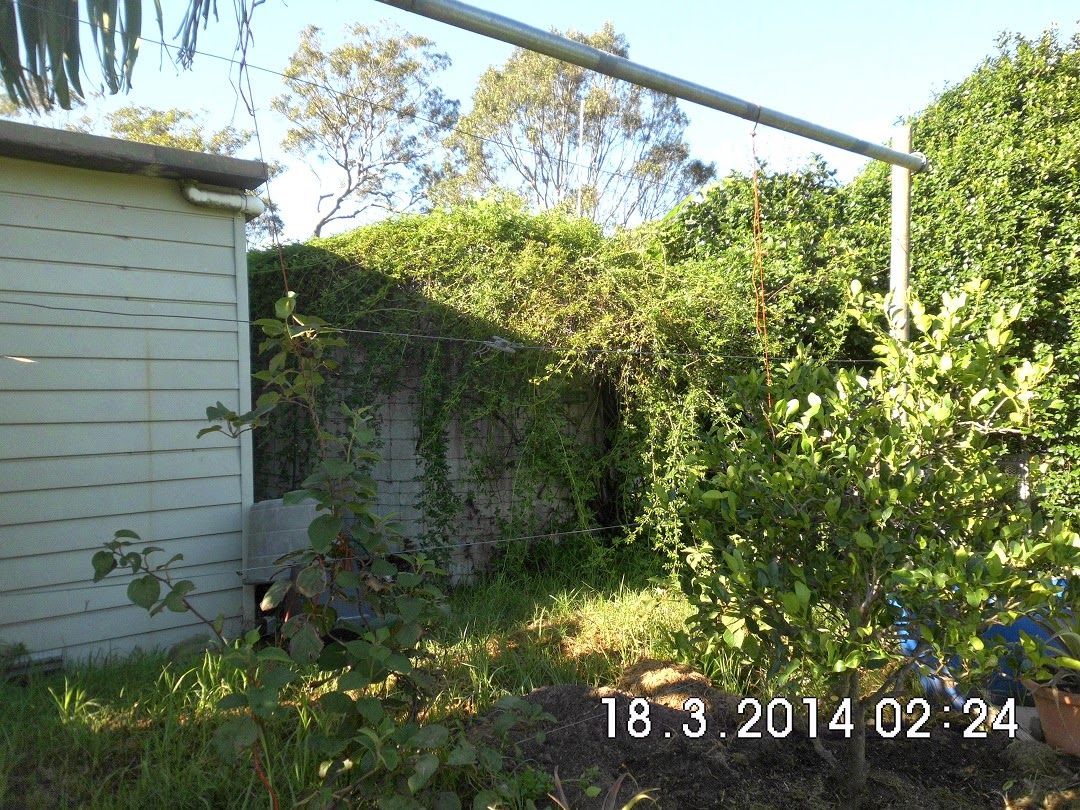
The holding tank for dam water kept cool with vines

Wildfire
This is the weak spot of HHF. Being on a ridge surrounded by forest we have limited options to protect against wild fire. Although we keep the areas close to the house clear of debris unless we remove the native trees we are open to flame attack from the south. Removing the native forest would expose us once again to strong southerly winds and destroy the habitat of a large number of native fauna.Our solution is to insure well and evacuate early.

The southern forest

Water Flow
The greater part of our property is native forest and there are no plans to alter that situation. We have examined the possibility of adding swales to some sections such as the orchard but retrofitting these presents a very difficult challenge. We are still examining how this might be effected without removing the current fences and damaging established trees.

The south

Saturday, March 15, 2014

Zones at Home Hill Farm

This is a look at our Zones and how they work for us.

The thing with Zones is they seem like common sense (in most cases) but sometimes it's possible to get them wrong. Unless it is a major infrastructure it is possible to rectify the situation in most cases after the event.

We wrote in a previous post about looking at another property further north in an area which appealed to us for a number of reasons. In the end the location of the buildings in inappropriate zones made the property unworkable. So it is possible to get it so wrong it is un-correctable.

Zone 0 is the house as it would be for everyone. Having the double garage just outside the back door made it an ideal conversion to a Cave used for wine making, cheese storage, extended pantry and a dozen other things. It works really well. We go into the Cave a number of times each day. Having it any further away would be frustrating. At one time we had the shade house where we raised seedlings just that little too far away which meant they got overlooked i.e. not watered. It was moved closer and into a spot that we had to walk past every day. That location has proved to be ideal. A small change with a big return.

Potting bench and seedling shade house at the back of the Cave with hot and cold water and wash tubs. You have to walks past it every day.

Back door to Cave about three steps

Front of the Cave has a paved area under cover ideal for drying and or pressing grapes


The western side of the Cave has Bananas for shade and hopefully some Kiwi vines shortly. The water tank for holding dam water and the pressure pump for the watering system are all here.

Zone 1 is the house yard. Within this are a few fruit trees but mainly it contains our fixed vegetable beds. This is also our living space and contains ornamentals. They gladden the heart. The yard is fully fenced in netting and a top electric wire to keep predators out and our dogs inside. Because of the dogs we keep some expanses of lawn for them to roll about and play. Probably the only draw back of our Zone 1 is the grass which needs mowing. We found out how important grassed areas are when Nikki had a bout of diarrhoea. After a while he had to spend most of his time looking for a clean spot. Fussy bugger is Nikki. We now make sure we also take the dogs into Zone 2 each morning when letting out the chooks. This gives then that chance to find a clean spot for toilet duty.

Compost and vegetable beds

Zone 2 Is our Orchard. It contains the chicken run and the girls have access to the entire area. We do mow it every now and then which is important to encourage the girls to wander to the extremities. It also looks great seeing the flocks moving about amongst the trees. This zone contains my workshop, the house water tanks and as close as possible to Zone 1 is the wood pile. This zone on the Eastern side is where the bee hive is located within easy reach and within sight of our outdoor entertainment area. No effort to keep an eye on the honey gathering activity and spot any early warning signs. Zone 2 is fully fenced with heavy duty netting and an electric wire to protect the poultry.

Outdoor eating and bees in the background

In zone 1 looking over to the workshop and chook yard

Vegetable beds edged onto the orchard

Zone 3 is where we set up a bed to grow Tomatoes and vine crops each Spring. Planted in September this bed commences yielding food in November right through to April/May before we let the cattle in to clean up. That bed is electrically fenced to keep the cattle out in the interim as Zone 3 forms part of the area allocated to cattle. Zone 3 also contains our western and southern wind break trees. Now that Zone 2 fruit trees have matured they also add to the wind break which has created a micro climate in zone 1. Amazing how a little protection from high winds improves crop yields. A bit like the walled garden concept. We also have our hayshed/tractor shed in this zone. Only because it was the only spot in which it would fit without being in the way and with all weather access. It works fine as we don't access the tractor that often nor the hay. The paddocks are designed to be accessed from that shed by vehicle and cloven hoof. A good central hand feeding spot.

Zone 4 & 5 contains our 7 mega litre (life saving) dam and a few historically cleared patches enclosed by native bush. Once or twice a year these patches are slashed to freshen the grass for the cattle. The wooded areas supply wood for our Winter heating. These zones are split into paddocks using a single electric wire and can be easily divided up even further with portable fencing if needed.

The light forestation

The kids coming for a walk to the dam


The dam with the seasonal azolla smattering

Probably one of the most important things to keep in mind is access. It's easier to put in lots of gates at the beginning rather than walk that extra distance every time. Access also means vehicle access especially for bringing in firewood or mulch hay. This adds a little complexity in making sure there is a cleared pathway. Our big mistake was in the Orchard with trees planted on a 5 metres grid. Now they are mature the path we originally designed for the tractor is overgrown. Fortunately there is an alternative route. In hindsight a 10 metre track would have been ideal. That is why sometimes I think you need to spend a decade building up a property to practise all the mistakes and then move onto a fresh canvass with that experience in hand.

But of course you get attached and in most cases a little rework is good for the soul.

Thursday, March 13, 2014

Function Stacking

This is one of the concepts within Permaculture that really appeals. Whether it be incorporated in a simple task like compost making or whether it is embedded in the design of the property. For us it fits into our everyday activities as often as possible e.g. the cloths washing waste water onto the garden, I never head off to the workshop empty handed or come back empty handed. It's a built in desire to be as efficient as possible with every activity.

The reason compost making is enjoyable is because of the function stacking angle. Pruning and weeding are regular garden activities for us. What a pleasure it is to combine those outputs into a NZ compost and gain the output of that process for feeding the soil. By timing the pruning and weeding and coinciding it with compost making all double handling can be eliminated.

The chicken run is designed to be accessed by a trailer so that the build up manure can be easily removed and reprocessed in compost making. Kitchen scraps are put into the chicken run so that whatever is not consumed by chickens is scratched over and mixed with the bedding material. The cleanout is combined with compost making and building our annual Tomato bed.

Bees are kept not just for the honey but also to increase the quality of pollination in our Orchard. The Orchard contains a number of Apple trees. Some are for eating and some are pollinators for the eating Apples. The pollinators just happen to be very good Cider making Apples.

Some years ago we were forced to vermin proof the roof cavity as the rat population was in biblical proportions. Off came the roofing iron in sections, the old rat eaten insulation removed, the rat droppings vacuumed out, damaged battens replaced, joists repaired sheeting installed over the veranda, rat proof mesh installed in any access points, new glass fibre insulation installed in every space, even over the veranda, new vapour barrier installed and the roofing iron replaced and sealed. A massive effort taking four weeks but done once and done well.

The simplest function stack is motor vehicle movement. Going anywhere is prefixed with "What else has to be done?" Shopping in Raymond Terrace is a long round trip to the Post Office, Library, Fuel, Shopping, Bill paying,  collecting fresh Oysters, picking up milk for drinking and cheese making and often dropping in on our work place across the river to knock over a job or two.

Wednesday, March 12, 2014

Loving the Present or Fearing the Future


What about embracing sustainability because we love the things we love about the present, not because we fear the future?”

What he said set me thinking. Maybe there is something in that statement.

At HHF we grow our own food, not because food in the shops will suddenly run out, but because we like the taste and the nutritional freshness of home grown. We know what went into growing the food and we know it is free of anything that can hurt us.

We incorporate Permaculture design methods and thinking as well as other practical planning and management processes because they make sense and make us more efficient in getting all those things done that we enjoy doing. Without good planning and execution it just isn't possible to fully achieve our goals. Things like Function Stacking and using Zones appropriately build both short and long term efficiency to everyday activities freeing up time for other tasks (such as reading).

Frugality and waste reduction leads to saving money and to independence. It is, surprisingly, a more efficient way to operate.

Why are Jean and I so frugal and hate waste?
 
Its not because we want to save the planet. For Jean it's very simple. Somebody put some energy, love, tenderness and care into creating that object. It now has its own aura. To throw it away without having used it to its fullest is disrespectful to both the person who was its creator as well as to the object and to the source of the material of which it is constructed. And it's a waste of money.

Isn't it good to hear the point of few of others such as Larry Santoyo to stimulate the mind and think more deeply?
 
It doesn't even matter if you agree with them. It is the review of your own thinking that is important.

Sunday, March 9, 2014

Permaculture Audit on HHF - Guest Post on Eight Acres

Being offered an chance to write a guest post on another blog is an exciting challenge. Suddenly there was a need to raise standards of literary entertainment as well as take a lot of care with grammar and punctuation. When doing something for yourself, there is some latitude with quality, but when it is for another, personal pride demands a lift in standards because of the responsibility to the requestor. This is especially so when the recipient blogger, Farmer Liz, sets a very high level of presentation and content.


There is no guarantee that what has been written will meet those standards; but we tried. The opportunity, however, did create an environment in which it was possible to attempt to improve writing, think more deeply and review the status quo here at HHF.


The link to the post on Eight Acres is Guest Post by HHF