Search This Blog

Showing posts with label Mulching. Show all posts

Wednesday, July 30, 2014

What it means to have a small Holding

Here's the theory for July: It's cold or at least cool, it could be misty in the morning and even drizzly rain, the fireplace is ticking over with hot coals or a fresh piece of wood flaring, a bit of a wind gusting outside and the sky is grey. Time to spreadeagle on the lounge with a one of the many books backlogged in the pile and relax.

Now here is the reality: The sun is shining, the wind has gone for the moment, the grapes need pruning and weeding, tomato varieties need selection and potting under heat to be ready for a September planting, there is a pile of other fresh pruning's that need a run through the mulcher and there will be a need for lots of compost in spring so make use of all the green material you have.
 
The book goes back on the pile and work begins. All the grapes get pruned, a little layering or transplanting of last year's cuttings to fill a spare spot. Tying up any rogue shoots, a quick weed around the trunk and on goes a huge pile of cow rejected silage which stinks but the wind is blowing that scent across to the neighbours and away from us. Oh well, the smell will only last a few weeks. It is just part of nature in the country. Probably means moving a bottle or two of last vintage from our side of the cellar to the neighbours side of the cellar.

Table grapes pruned

Ready for chipping and mulching


A lot of work and tons of silage but will pay dividends

Using the freshly made compost to start seedlings
 
July can really be one of the busiest months of the year. At least in August it will only be the last week when the Tomato bed needs building that life will become a little hectic. Then of course with September becomes the planting out of the warm month vegetables. Always too many for two but there are always many happy recipients elsewhere in the village. There is the anticipation of the first fresh tomato and first young cucumber. Yes it is possible to use a hothouse and grow the most delicious produce all year round but then the mouth watering wait and abstinence is missing and life lacks those peaks and troughs that provide contrast and highs of long awaited pleasure.

As the weather warms up and if the rains come the following 6 months become a blur of weeding, watering, planting and harvesting until the blessed cool arrives with a sigh of relief tools go down and relation comes in the form of wine and cheese in the mildly warm garden.

The steady rhythm of seasonal demands and rewards. With each bringing the expectation and desire of the next stage. Maybe some find this repetitiveness boring. But there is a pleasure which can't be felt from any other form of activity. Contact with the soil, plants and animals seems to be a desire that comes from deep inside.

For some it's the travel, the sport, the toys for us it's being at home on our own plot, digging and weeding, having successes and having failures, plopping down in the evening with fresh home made produce and resting for tomorrow.

Wednesday, July 9, 2014

Silage: More Uses

It's no surprise that we have started to accumulate waste silage in quantities that beg for alternate uses.

Another Compost in Progress with Bill watching

Rather than leave piles of the waste silage around the farm across the river it is loaded on the ute and brought home. One compost bin has been compiled and another two are empty which will be filled gradually over the next few weeks.

This pile looks small but it is close to a ton of rejected silage collected last night

But there is still more than can be used in the current compost bins. Then an idea struck. Why not use some of it to mulch around the grape vines and then when this is done ditto for the fruit trees. And so a few ute loads have now been dumped in the vineyard.

One row of 12 done

There are now multiple parallel projects in progress. A NZ compost has been started using silage and fresh cow manure already collected. The green matter is coming from the vineyard. By mowing up and down the rows with a catcher green matter is collected and the ground prepared for mulching. Just before piling on the silage mulch there will be a bit of weeding and weed trimming around the vines.

This mornings collection

Life is a bit hectic keeping up with the tasks but it seems a real waste not to take advantage of this rare opportunity.

Friday, May 16, 2014

Mulch

We are finally catching up in the garden.

Jean's new Hugelkulture bed for the orange Blossom


A while ago we picked up two large round bales of silage from a nearby farmer. These were not of good quality and the farmer sold them as mulch for $30 a bale. This is a very attractive price although large round bales are not as easy to handle as small squares. But a large round is the equivalent of about 10 to 15 small square bales.

The farmer was kind enough to remove the wrapping some weeks before we collected the bales allowing them to dry out and dramatically reduce the weight. It also removes any fermentation smell.

The best way to use round bales is to chainsaw it into 4 quarters. Just stand the bale into an upright tube and run the chainsaw down. It's possible to cut into more segments if smaller pieces are required.

The bale splits into easily manageable segments and you can choose the thickness you desire by just grabbing the necessary number of layers.

We have started to heavily mulch around various parts of the garden in preparation for next Summer. Because of the shallow soil on our property we find Citrus in particular with their shallow roots need a good mulch covering. But in general just about everything else in the garden handles the hot dry Summer better with a thick layer of mulch.


This is the best time of year for us to mulch because the soil is damp from the Autumn rains and the mulch will now lock in that moisture. Mulching when the soil is dry tends to lock in the dry soil which takes longer to re-hydrate.


Tuesday, May 13, 2014

Compost Rules

A previous compost fully matured.
For some time there has been a NZ compost on the horizon. That is to say we needed to make another one to keep up the steady flow of plant food for the vegetable garden. We were also building up a supply of ingredients which were starting to get in the way. The Plumbago (bloody weed) had a good haircut and the trimmings left on the ground. The pond was cleaned out all that green material piled high. One of the kitchen compost was full.

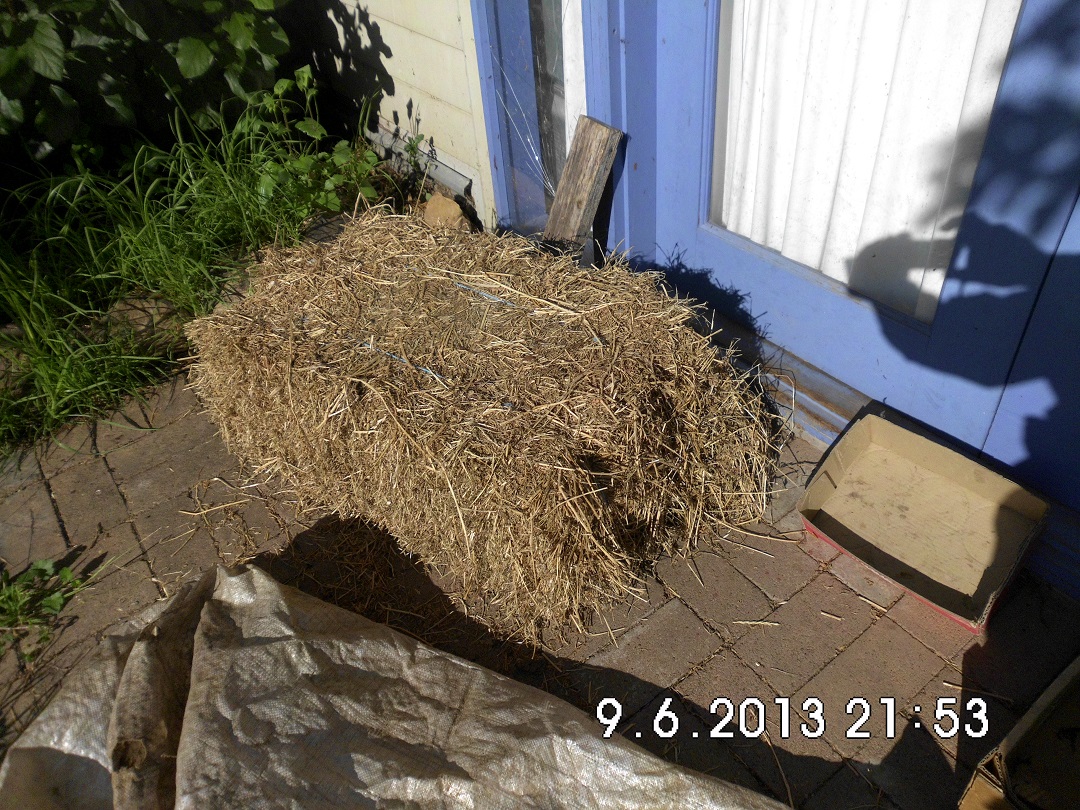
Mulch Hay

The kitchen composts contains all those things we don't want blowing around the chicken run such as scraps of paper and various woody bits, weeds and seeds. The problem with the kitchen compost is although it breaks down it is a cold composting technique which keeps the seeds viable.

Empty Kitchen Compost

I'd already started building the layers of the NZ compost using some of the material from the top most section of the previous one which hadn't quite broken down. In particular it held Couch Grass runners which hadn't been heated enough to kill them. This material was mixed with freshly mown grass to make sure it heated to the maximum.

The Mulcher

The next phase was assembling alternating layers of mown grass, mulch hay and parts of the various collected material mentioned in the first paragraph. A lot of this material was wet and some of it partially decayed making it difficult to run through the mulcher. To assist the throughput the filter plate was removed. This plate has large holes which prevent material from leaving the mulcher until it has been chopped to a certain size. By removing the plate anything going into the mulcher is hammered heavily but exits very easily. We found this technique works well with both wet material and fibrous vegetation such as palms.

Filter Plate


Mulched Kitchen Compost

The entire afternoon until dusk was spent on this project. Layer after layer of hay, grass clippings and mulched material spread in the compost box with occasional dustings of Dolomite and ash from the fireplace. Most of the material was wet and we watered only the dry mulch hay layer.

By nightfall every thing we had was used and we were at the top of the bin. The next morning it would be topped with some more grass clipping just ensure a lot of heat and then covered with some hay. A hole was poked into the centre with a steel bar to assist in aeration.

NZ Compost

The end result is a clean and tidy yard. All the piles of pruning's gone (leaving a few bald patches) and the entire yard nicely mown. In five or six weeks this compost will be turned into the other bin making sure the outer edges go into the centre and allowed to heat up again. And then we will have more nutrition for our vegetables.

Bare Patch

Mown Yard

Friday, April 18, 2014

Garlic Planting, More on Mustard

A big day in the garden today. Jean is the chief Garlic planter - I'm too rough and ready. While she was away last week three panels of one of the garden beds was prepared with chopped green manure and compost. Now Jean adds Lime and Sulphate of Potash as recommended in one of the gardening books. Then the bed is gone over with a small hand fork to ensure a finer tilth. She measures out distances and lays down the first grouping of bulbs to see how they will fit without crowding. We plant a little closer than most. The soil is rich and the closeness will reduce the weeds.

There are 13 groups of Garlic to plant. The first four groups fill the three panels with 177 cloves. Jean takes a break to wash the dogs while I chop green manure in another two panels and fork in loads of compost. With the dogs done she returns to perform the final preparation and continue planting. It's obvious that she will need more panels to complete planting all 450 cloves. There is some spare space at the other end of the bed. It gets a good weeding and a really heavy application of compost. Later in the day she found herself a foot short of a finished task and dug over the last little bit herself. It was a big job this year and we are both very pleased to have completed such a large and important task.

Almost the entire bed devoted to Garlic.
When the garlic is reaching maturity the watering needs to be stopped to enable the corms to fully set. Having an almost full bed of Garlic will make it easier to stop automatic watering and hand water the couple of panels that hold other plants.

In the mean time the Broccoli needed attention. The plants had grown sufficiently large enough to allow the pesky Peacock to continue his leaf pruning over the existing mesh guards. resurrecting some tall mesh panels from storage an exclusion zone is installed.

Chewed

Protected

The Orchard and Vineyard are heavy with Autumn growth and the ride on mower is given some exercise. While out and about one of the large silage one ton bales which we chainsawed into four sectors is broken up and various garden beds get a heavy application of mulch. All part of the plan to reduce watering needs next Summer.


MUSTARD.
When making mustard always use cold water/verjuice/wine/vinegar when adding to Mustard powder. There is a chemical reaction that occurs producing the pungent odour and sharp taste. If  using warm or hot liquid the burning sensation remains bur with a slight bitterness and complete lack of flavour. If you cook Mustard the pungent overtones are lost.

Monday, August 5, 2013

Seedlings for Spring, Who Knows How to Germinate Capsicum and Eggplant?

An interesting morning (for us). Across the river the boss rang yesterday (Sunday) and said he was heading back to Sydney "Don't worry about rushing over tomorrow morning, none of the cows look close to calving". Arrived at 10 am to find two new calves and a third on the way! As my dairy farmer used to say when asked when the Springers were due? "Sometime in the next three weeks" was the standard answer.

Spent some time ear tagging the newborn and then slowly moved all the new mums into a fresh paddock (now that we have a mini herd of 10) and set up a grazing strip in an adjacent paddock with a good crop of Rye and Clover. Only a small strip to start and gradually increasing their quality and volume of feed as their stomachs adjust.

On the neighbour's property next door the herd of 7 on the river have all had their calves as of this morning. A gate to a new paddock with some greener feed was opened and some relief for us as we now only have to check them every few days instead of daily. Up on the Hill only 11 of the 16 have calved.

The Tomato seeds we planted have all germinated and have now been all transplanted in larger pots. They have started to fill out and all is looking good for a Spring planting.

Transplanted Tomato Seedlings

The only problems have again been with the Capsicum and Eggplant seeds. Only one Capsicum has germinated. What is the matter? We have this problem every year. Does anyone have any suggestions?

The morning went quickly with cattle work leaving the afternoon for a period of intensive weeding. With surprise that went well with most of the weeding complete by nightfall. Only one bed to finish tomorrow. The fine Lucerne mulch (ex the mulcher) has worked well and only the edges of the garlic stands had to be tidied. Will try to make some more fine mulch material tomorrow and get the onion stands mulched.

The beauty of having plenty of composted material on hand was that generosity could be extended to any plants that were a bit slow in maturing. A few Carrots, Beetroot, Spinach and Pea plants needed a little lift.

With the westerly winds blowing all day things were drying out and needed a solid water on dusk when the wind stilled for half an hour. Will need to pump up again tomorrow - thank you 7 mega litre dam you are a life saver.

Wednesday, June 12, 2013

Mulching


Regular weeding is an ongoing task with any vegetable garden and it is not one of our strengths. Always on the lookout for a time saving technique we have tried various mulching processes to reduce weed dominance. Garlic and Onions are very difficult to mulch and tedious to weed. One useful and effective technique we have been using recently is to run old Lucerne through our mulcher producing a fine chaff. This is easily sprinkled over younger seedlings to cover the soil.

Originally used mulch hay but it held too many seeds. Lucerne or straw bypasses that issue.

Our Chipper/Mulcher is over 15 years old and has proven to be a versatile and useful garden tool. Its list of achievements are:

  • Chipping and mulching garden prunings
  • Chipping fish heads and frames for chook food
  • Mulching straw and lucent bales into fine chaff
  • Mulching oyster shells and Cuttlefish frames into shell grit for chooks
  • Mulching fireplace charcoal into bio char
Spoilt Lucerne

The versatile Chipper/Mulcher


Garlic Mulched with fine Chaff