Search This Blog

Showing posts with label Camembert. Show all posts

Wednesday, June 25, 2014

Cheeses, Parmesan, Blue, Camembert

For once there is a massive choice of cheeses all perfectly ripe for eating in the cheese fridge. We took samples of these to the Wine Tasting to be shared.

Despite all the background cheese making that occurs at HHF we don't always have a big cross section of cheeses ripening all once like this although probably should be goal.


Blue

Perfectly ready

The larger sized Camembert for slower ripening

Runny cetntres

15 months of age

Great texture and flavour

Tuesday, May 20, 2014

Making Camembert and Preserving Eggplant while waiting for the Camembert

Camembert is a pretty simple chees to make especially after you have done it a few times. Practice makes it simpler.

Today I used Cheeselinks Type B culture as opposed to Type A. Only because we had plenty in stock in the freezer. For some time I've used two white mould cultures which seem to ensure 100% success and a good end result.  They are Penicilium Candidum and Geotrichum Candidum

Our home made forms
Cake knife for cutting the curd

Filling the forms with a small sieve

Job done, will turn these a few times

Some of our forms a pretty tall. This is just so it takes up less space on the kitchen sink while draining. In the morning the taller cheeses will be sliced into two or more smaller cylinders before brining.

The time in the kitchen making cheese isn't fully occupied and Jean had pointed out that a miserable little Eggplant in the garden had produced a substantial crop of fruit. More than we could consume before over ripening.

Preserving the Italian Way by Pietro Demarco and Arnold Bonnet has been one of best finds in the preserving book world. Very simple and healthy methods without excessive salts, sugars or over cooking. And flavoursome.


Red wine Vinegar

We used a recipe we had tried before and made three small jars which will be excellent ether as adjuncts to some cheese or as topping to a Winter pizza.

There was no white wine vinegar about and I used Red Wine Vinegar instead. One of the by products of wine making is there are always some failures to turn into vinegar.


Saturday, April 19, 2014

Camembert, Mushrooms, LED and lots of other things

Gradually we have been reducing the volume of Camembert made at any one sitting to making it more often in order to maintain a reasonably steady supply. This involves less than 10 litres of milk which translates to about 10 small rounds. The other modification to our processing is to make some thin rounds and some thick. This serves to spread out the maturity time. We still end up giving a few cheeses away to friends but now it is in a more manageable quantity.

Large

Small

We now have the coffee grounds needed to start the mushrooms but couldn't get any Oyster mushrooms to start the process. In the interim we will use the standard button mushrooms as a trial.

Aldi had another pile of specials which included LED light globes with a decent number of Lumens. We collected a couple more to replace an outside spotlight which is undercover and doesn't need to be waterproof and one in the workshop we use for short term lighting when making a quick visit which negates turning on a bank of fluorescent tubes.

Cobwebs not included

We have been slowly replacing various types of globes with LED. The trick is to use up the ones we already have rather than turn them into landfill unused but at the same time be economical with power usage.

In preparation for the next fire season we've acquired a fire proof storage box (again from Aldi). It's just large enough to hold various critical documents such as Wills, identification documents and financial papers. The shortfall in our fire plan had been what happens if there is a fire and we are not there to take away bag holding these documents.

Fire and waterproof case

A small fire extinguisher and smoke alarm were purchased for the Cave.


Rather than try and do every thing at once we are slowly addressing small parts of our preparedness plan. This spreads out the cost and makes it all manageable (affordable).

Thursday, December 5, 2013

Mulching cardboard into NZ Compost and more cheese making

Most of the the day has been spent making another NZ compost. To finish off the depth needed I'm reduced to mowing the lawn by hand to obtain enough green matter. The carbon is coming from mulch hay although overnight I had a brilliant thought.

We have accumulated a lot of cardboard in the form of collapsed boxes. Some from wine and some from other packaging. Rather than recycle it we have held onto the lot to use as a mulch base for garden beds. But not putting in any new beds of recent has meant it has become a large stockpile bordering on hoarding. My idea was to feed it through the mulcher to make it more digestible to bugs.

At first it was fed through the chipper but in the end I found it worked just fine through the main chute. As long as the material is cleared away from the outlet regularly there were no problems. Being a windy day I slipped a feed bag over the opening to contain the paperwork.

Every day we are finding another use for this aging mulcher.


Battling on with cheese making and Jean continues restocking the cultured butter. Today it was some Camembert made early enough to ripen for Christmas.
 
The tall Camemberts will be sliced down to size for salting

Tuesday, October 29, 2013

Attacking the mites and other matters

Across the river at our work place there are now two irrigators to set up twice daily and that means more time away from home. In addition rather than feeding out round bale silage every few days to one set of weaners and then the cows and calves we are putting out small square bales which are loaded on a pallet and driven to the particular feeder, twine cur and all the pieces thrown into the feeder. Why? We have finished all the home made silage and have five really top quality Ryegrass bales remaining. Rather than use them first we are getting rid of all the old small square bales which are a bit rabbit and rat eaten and have broken twine. This will leave us with the 150 new bales collected at the weekend. Between the old stuff and the new Ryegrass silage we should get through the dry spell - we hope.

Back home after two and a half hours away its time to sort out the chook pen. All the sawdust, some still a bit fresh and other well aged and full of chicken droppings is shovelled into 20 litre buckets and carried to an old trailer and dumped. The fresh stuff is kept at one end and the good stuff at the other. The trailer is filled and then we turn to some spare 200 litre drums filling three. All these are covered to keep out the chooks. We will use all this at some stage when the mites have died out.

The uncovered areas of the pens have a heavy dose of dolomite dusted over them while the area under cover has fireplace ash and when dry will have diatomaceous earth as well.

The covered area with fireplace ash

As an experiment one pen is filled with old silage and the other with cow manure. The area under the roosts and under cover is left clear for the moment. It is still a bit wet from the hosing out and needs to dry. It will be a matter of finding time to concrete this space.

Dry Cow manure

Old silage

First resident taking advantage

We barely finish and the rain comes. And the wind. It buckets down. As soon as the first flush has occurred we scramble to remove the plastic bags covering the down pipes. This was to stop the dam water used to fill the gutters during the high fire danger going into the tanks. Jean is up on the roof removing leaves from the gutter. We get soaked.

The first decent rain in a while
The storm passes but we have caught some water.

And there is some damage as well. There were high expectations for the Dragon fruit as it had grown well over Winter and last Summer produced three fruit on a small plant.

Hopefully if the roots are not damaged it may be fixed
In the background some Camembert is under way.

These are tall moulds. In the morning they will be taken out and cut into smaller discs for salting. The tall moulds just save space on the side of the sink.

For 4 days we have been trying to make Coconut Yogurt using coconut milk, Tapioca as thickening and ordinary dried yogurt culture. Well very little happened on the first day. Then we added some honey to see if the culture needed sugar, On the third day in went some Coconut flour to thicken some more. On the third day we tried adding jam setter.

Trial batch or CoYo

I quite like the taste which is very acid now but the texture is still quite runny. Jean didn't like it at all. It went well over some frozen berries for dessert - at least I think so. Maybe we need some special culture although almost everything on the web said ordinary yogurt culture would work. Well it has the sour taste it just needs work on thickening.

Monday, July 1, 2013

Rainy Days, Camembert, Peas


It has been raining off and on for the last week. Just enough to make everything under foot soggy. Too difficult to work in the garden and probably not a good idea anyway especially with any digging tasks which could lead to damaging the soil structure. Too wet to go fencing and earn some money. It pays to have prepared a reasonable supply of firewood in advance otherwise things could get really miserable.


10 mm Overnight

Footprints in the grass

So the first few days it was attending to those jobs that were put aside for a rainy day. Catch up on sewing i.e. repairing any work cloths that need patching, Into the workshop for some ride on mower repairs, Build an insert for the filing cabinet to hold the DVD collection. Sharpen a few tools ready for the next interesting job.

Food is not ignored as we have eaten or given away all our Camemberts. We always seem to make too many rounds and they all mature at once. The solution was to pass spares onto friends to repay favours sometimes in advance of expected favours. Today though we tried another approach i.e. using less milk and making fewer rounds. sometimes moderation is difficult. This batch is 7 litres of milk but has had the cream from the original 21 litres added back. This could be called a triple cream Camembert. Used B Flora starter from Cheeselinks  and added both varieties of penicillin i.e. Candidum and Geotrichum and just followed the recipe.
 
Camemberts ready for brining
 

The sauerkrauts made earlier are fermenting and will soon be refrigerated just in time to make some more batches. The cabbages have done well and there are another two almost bursting ready to be picked. Might think about trying some recipe variations for different flavours. There are still three small Wong Bok to be made into Kim Chi tomorrow.
 
Ready for the plucking
 
 
Sauerkraut bubbling gently
 

And something that has never been done before and that is start the tax return on day one of the new financial year. Always an onerous task continually put aside in favour of other more exciting work here we are within an hour of completion just waiting for the arrival of some bank statements. Hopefully the Tax Office will owe us money and make it all worth the early effort. It is nice not to have this task hanging over our heads for the next few months.

But things are looking up. The prediction is for many fine days ahead which means the July garden tasks can start. Artichokes need to be planted out, Bunching shallots need planting, Turmeric needs harvesting. And of course weeding has fallen behind.
 
Some things are really taking off with the rain such as the Citrus and the Peas. The Peas are the best we've grown for some years. The last time was when we made a bed with just old horse manure. This time we'd run out of compost and green manure options. Instead lots of Blood and Bone was churned into the soil. Also the watering system was changed i.e. took out the overhead watering nozzles and watered by hand. This is because the plants last year suffered quickly from mould on the leaves. Also only watered the seed once after planting until they had germinated. I think in previous times we may have over watered and rotted the seed.
 

Climbing Peas over 2 metres tall. A mix of podded Peas and Snow Peas
 
With all Citrus we have tried to plant early, mid and late ripening varieties to ensure the maximum availability. Most of these were planted in 1995 in shallow holes (hit bedrock) mounded up with soil. Windrows of grape marc were placed between trees which were 5 metres apart (wish it had been more for the tractor to pass through). Every few years several barrow loads of cow manure was put under each tree and covered with weed mat. The weed mat has now been removed. This Imperial in the picture always manages good sized fruit. Far too much for us to consume. The fallen fruit will be mulched and composted.


Imperial Mandarin. This one ripens during July and August. The sister to this although also an Imperial ripens May and June. Possible just a slight location variation makes all the difference. 
 

Friday, June 14, 2013

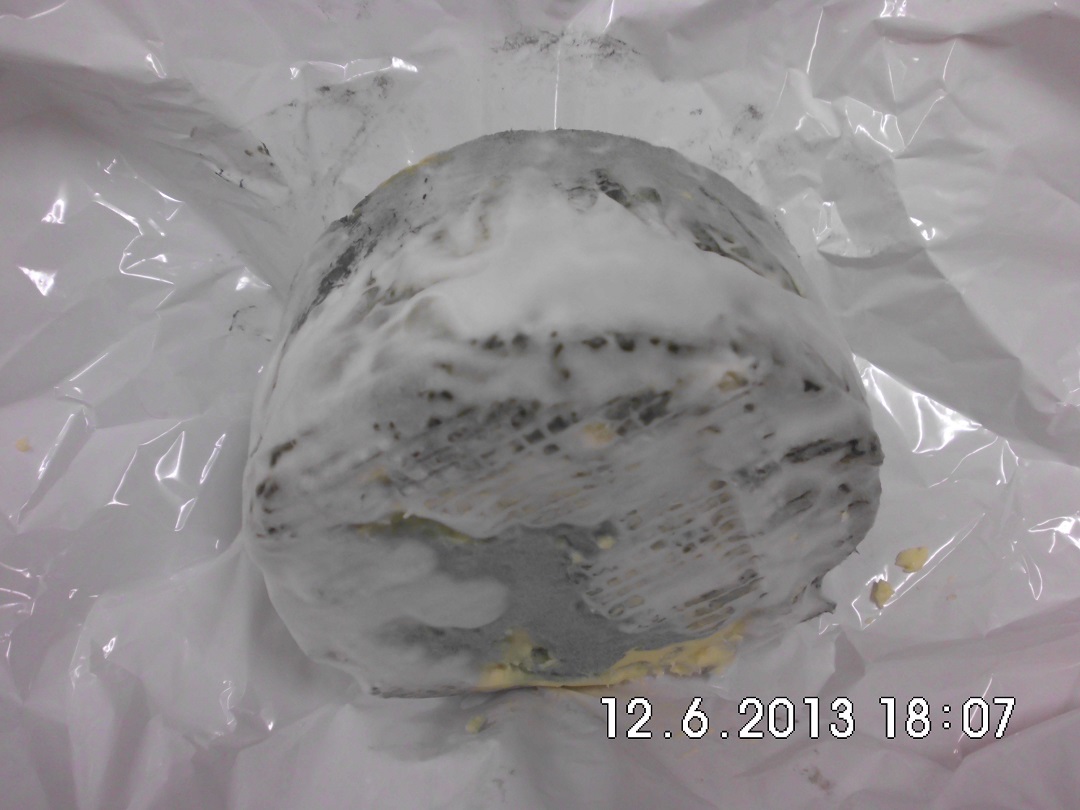
Camembert and Roquefort


Camembert is relatively easy to make. Said after ten years experience and a fair share of mistakes and failures. But after a while you get into a groove and it becomes second nature. The important thing is to keep trying and take notes on each cheese. Each cheese we make has a Cheese Making Note that stays on the Cheese refrigerator until the cheese is consumed. Any special useful changes are added to the cheese making book as margin notes e.g. length of brining on small Camembert rounds. We use the Cheeselinks book for most of our cheeses and both the Normandy Camembert and Brie recipes make excellent small rounds.
Roquefort is a different matter. Having found real Roquefort in a small supermarket in nearby Gloucester NSW it became an imperative to attempt to replicate the texture and flavour. The initial challenge was not having Sheep's milk. Raw cow's milk was the only option. The research indicated that a higher fat level was required and this was achieved by adding back cream skimmed from a larger quantity of milk. All the other processes such as starters, timings for each stage, salting and aging were accumulated from various cheese books and then the experimenting started.
The end result is a very creamy, bluey cheese which is nothing like Roquefort in texture and flavour. However what has resulted is a great blue which has now become a staple. The experimentation will continue but without Sheep's milk we can only dream.


Camembert in its Humidifier

Roquefort in Cheese Wrap stored on edge to allow maximum airflow through holes
 

Partially Aged Roqufort


Roquefort Recipe

% Moisture 42.44 % Fat 29 % Protein 20 % Salt 4.1
Temperature 30 C pH 6.5

Cheeselinks Cultures B&C i.e. Lactococcus Lactis, Lactococcus Cremoris, Leuconostoc, Streptococcus Thermopilus, Lactobacillus Delbreukii Bulgaricus

Rennet 5 ml/20 L
Set for 2-2 1/2 hours
Curd cut 1-3 cm
Stir 2-5 times over 40-60 mins
Drain to Curd depth and fill hoops
No Pressing
Drain 2-3 days turning regularly
Dry Salt 4.1% of Curd weight
Ripen at 8- 10 C for 18-25 days
Pierce holes
Wrap
Stack on sides
5-10 months at 1 C (or 8-10 C for quicker ripening)

Cheese Refrigerator - Bottom Shelves: Haloumi and Fetta, Middle Shelves: Camembert and Roquefort in Humidifiers, Top Shelf: Cheddars and  Havarti, Door: Parmesans.

Wednesday, December 8, 2010

Sawdust, Garlic, Mower Blades, Camembert, Cucumbers, Beans and Zucchini, Roasted Tomato Chutney

Sawdust

At the beginning of Spring all the sawdust in the chook yard was shovelled out and most of it used to make beds for the tomatoes and melons and some put aside for use in other vegetable beds. After nearly 12 months of being scratched and manured by the chickens it was full of nutrients and well broken down. Finally this week it was replaced with fresh sawdust, 150-200 mm thick. If it is made too thick it forms a hard pan and needs to be chipped part way through the year to ensure it is fully aerated and exposed to droppings. The easiest way to obtain sawdust is from any nearby sawmill by the truck load. 20 cubic metres lasts many years as long as there is somewhere to store it. Luckily in this area there is also a small holder with his own mill who cuts the odd log. He happily lets you take his waste for nothing. He even loads your trailer with his bobcat.
One of the advantages of having a few acres is the space to use a tractor, and one of the advantages of a tractor is its ability to have an hydraulic bucket on the front. One of the advantages of a hydraulic bucket is the ability to move large volumes of sawdust. There is nothing like a little mechanisation to speed up tasks. The tractor has a slasher attached partly to counter balance a full bucket and partly because it is the most used implement. Rather than remove the slasher to tow the trailer of sawdust to the chook run there is a tow ball welded to the slasher. This makes quite a long train moving through the orchard, but it works.
It is also useful to have one end of the chook run opening completely with a large, hinged panel. The panel is large enough to enable the tractor loader to fit through.

Garlic


Garlic in Drying Racks
The annual supply of garlic was harvested this week. Looking at some of the varieties it seems we may have left a couple a little late as the corms had split open. Some of this is due to the wet conditions. There are seven varieties we have collected over the years. Some have been found in supermarkets and some through seed suppliers. Mainly we keep the purple (tinged) varieties because they have higher levels of allicin – the stuff that is good for health. There is some variation in corm size. Since the beds were identically prepared this must be just a seasonal variation. We always plant the largest bulbs to ensure we maximise the end result.

Mower blades

With a property resplendent with rocks no matter how many are removed to a rock repository, more seem to emerge from the ground. These sneaky little beasts cause the ride on mower a lot of problems. Not so much it seems in blunting the blades as in curving the blades upward. The end result is a very poor cutting edge. A simple solution has been to grip the leading edge of the blade in a shifting spanner and twist the blade back to horizontal. A little angle grinding also helps provide an edge. After every mowing, some time is spent digging out newly exposed rocks with the hope that one day they will stop growing.

Camembert


The Raw Product

As an extra treat for Christmas, some camembert was made this week. About 12-15 litres of raw milk resulted in 15 small rounds which should be just about ready in time for Christmas day. At the very least it will be pleasantly edible even if it hasn’t reached that runny stage. Normally the mould spore added would be Penicilium Candidum but just for a change Geotricum Candidum was used. Because of the change, the recipe was followed meticulously. Past experiments have involved using the Brie recipe but the Camembert size small rounds. That blend has worked well for us. However, when trying something new for the first time, past results have shown it is always better to be exacting with the first trial batch before deviating.


Camembert Forms


Once made, the small rounds need a humid environment in which to mature. Refrigerators will dry out anything left uncovered. The solution is simple: place the cheeses on a tray and place the tray inside an air tight plastic bag. Seal the bag with a couple of twists and a twist tie. The moisture in the cheese will provide sufficient humidity; if it doesn’t just put a table spoon of water in the bag underneath the tray. The bags can be cleaned in the washing machine and reused many times.


Under wraps ripening

A nice big slice runny Camembert on some toast, with a glass of chilled wine is a most pleasant experience. Unfortunately, once it ripens, there is only a short period before it begins to get an ammonia smell and then sadly for us and happily for the chickens it is consigned to the girls. Progressively we have reduced the number made and increased the frequency to try and balance this situation. In addition, eating a few just that little bit earlier has provided some longevity in consumption.


Some Finished Product


The cheese fridge is reasonably full at the moment. The door has 7 Parmesans aging while in the shelving there are a few Swiss and Cheddars maturing. As always, a goodly amount of Fetta is in a light brine – this keeps very well and is easily made in large batches. As Summer is with us and tomatoes are coming on, a reasonable amount of Haloumi is on hand. Again, this is one that keeps very well in its brine solution. A short soaking in water removes much of the salt and then fried both sides so that it gets a little golden brown provides a nice topping to thick slices of fresh tomato. It has got to be one of the best Summer nibbles around with the harder texture and saltiness of the cheese balancing against that enticing tomato smell and flavour.

Asparagus weed update

Previously there was a mention of an invasive weed that appears to have held back the growth of the 4 year old asparagus. Well, the non chemical solution seems to be working as far as removing its presence. Initially, a number of hours of thorough weeding were completed, then on successive days much less time was spent going over the bed as a follow up, picking out any roots that were missed. Starting with a daily weeding in the first week, moving to weeding every couple of days for another fortnight, and then once a week. Finally, it is now just casting an eye over the bed for the telltale leaf structure and spot weeding as necessary and carefully following the root down until it is completely removed. The edges of the bed have been closely examined and weeded to depth. It appears this constant harassment has weakened the plant to a point of near extinction. The asparagus has suffered a little with having some roots disturbed and occasional minor damage to the crown. Hopefully it will now be free to grow robustly for the remainder of the season. To ensure maximum benefit no further picking was conducted allowing all energy to go towards plant strength.

Cucumbers, Beans and Zucchini

As always happens at this time of the year, there is a surplus of cucumbers, beans and zucchini. Many friends also grow vegetables, these three are not in short supply with them. Fortunately there are always a few city friends who appreciate a gift of fresh produce. The cattle have developed a taste for fresh garden produce and have no trouble eliminating any bumper harvest every day. So tasty are these vegetables, they’re whipped straight from the hand with a long, snaking tongue. It’s good to see nothing being wasted.
While speaking of cucumbers, it is only fair to mention the Japanese Climbing Cucumber. This incredible plant grows relatively slowly, as does its fruit. The fruit reaches large proportions at maturity, in the vicinity of 400 mm. Until it reaches full size, the seeds are still immature it is delicious and tender.

Tomato recipe

After having made the generalisation that no recipes will be published in this blog unless they are simple and delicious it seems that the very next posting will contravene that rule. But, this recipe is incredibly delicious even if not all that simple. It can be made in large batches and stored in small jars and eaten in smaller amounts to spin out the supply so the memory of the hard work involved fades. It goes really nicely with meat.
The recipe comes from Gay Bilson’s book Plenty.
Roasted Tomato Chutney
2 tbs black mustard seeds
400 ml malt vinegar
5 kg ripe tomatoes
300 ml Olive oil
200 g chopped ginger
20 cloves garlic
10 birds eye chillies
2 tbs turmeric
4 tbs roasted cumin seeds
2 tbs sambal olek (chillies in salt) (or just some ground chillies as we used)
250 gms palm sugar
100 ml fish sauce
Soak the mustard seed overnight in malt vinegar
Peel (we don’t) the tomatoes and roast in olive oil for up to 3 hours at 200 degrees Celsius. Don’t roast too many at once otherwise the steam will stop the roasting process. They should be dark and almost dry.
Blend all the remaining ingredients and simmer the resulting paste for up to an hour.
Add the tomatoes and their roasting oil. Add more oil if necessary.