Search This Blog

Showing posts with label Eggplant. Show all posts

Tuesday, May 20, 2014

Making Camembert and Preserving Eggplant while waiting for the Camembert

Camembert is a pretty simple chees to make especially after you have done it a few times. Practice makes it simpler.

Today I used Cheeselinks Type B culture as opposed to Type A. Only because we had plenty in stock in the freezer. For some time I've used two white mould cultures which seem to ensure 100% success and a good end result.  They are Penicilium Candidum and Geotrichum Candidum

Our home made forms
Cake knife for cutting the curd

Filling the forms with a small sieve

Job done, will turn these a few times

Some of our forms a pretty tall. This is just so it takes up less space on the kitchen sink while draining. In the morning the taller cheeses will be sliced into two or more smaller cylinders before brining.

The time in the kitchen making cheese isn't fully occupied and Jean had pointed out that a miserable little Eggplant in the garden had produced a substantial crop of fruit. More than we could consume before over ripening.

Preserving the Italian Way by Pietro Demarco and Arnold Bonnet has been one of best finds in the preserving book world. Very simple and healthy methods without excessive salts, sugars or over cooking. And flavoursome.


Red wine Vinegar

We used a recipe we had tried before and made three small jars which will be excellent ether as adjuncts to some cheese or as topping to a Winter pizza.

There was no white wine vinegar about and I used Red Wine Vinegar instead. One of the by products of wine making is there are always some failures to turn into vinegar.


Thursday, March 6, 2014

Preserving

Last year we had a few spare Capsicum and tried a preserving recipe. During Winter wanting some filling material for a pizza we tried the preserved Capsicums. To our pleasure they were surprisingly flavoursome. It was a simple preservation recipe which did not use excessive salt, vinegar or sugar leaving the preserve tasty straight from the jar.


Capsicum
One of the issues with many preserving recipes is the excessive use of sugars and salts or vinegars. We have tried to eliminate the use of sugar in our diet and now limit ourselves to a little honey in homemade chocolate. Salt is a bit easier to handle as a period of soaking prior to use can reduce the salt content. We do this with Haloumi. Vinegar can be pleasant in small quantities but not so when excessive and is harder to remove.


Eggplant
We could freeze produce but there is a limit to the number of freezers that we want to operate at any one time. We already run two chest freezers and have a backup but not in use upright freezer (which is inefficient despite being reasonably new). As well as our kitchen refrigerator we have a cheese fridge in the Cave and a backup freezer/fridge which is used for garlic, butter vulnerable seeds, chilling bulk milk and various other functions including drinks. It came from a relatives estate and is highly efficient. More than enough electricity usage for one household.

Apart from energy usage freezers demand dependence on the grid. Not an attractive feature for preparedness minded people.

Anyway back to the main topic. Some time ago we came across this book via a friend and found it very good. Excellent, simple preserving recipes that produce a good result. Highly recommended.

Pietro Demaio's Preserving the Italian Way


Part of the recipe we used calls for cooking the vegetable in vinegar of which we have loads. A by-product of wine making is occasionally you have a bottle or two that doesn't work out. We keep a few flagons in the laundry with cotton wool stoppers and tip the wine into those. Every now and then when we remember some of the flagon material is decanted into bottles and stored in the cave. Mostly it's red wine vinegar but apart from imparting a little colour it works just as well as white vinegar.

Red Wine Vinegar

Wednesday, February 19, 2014

Picking up Ideas

It's useful to read other people's blogs. Reflecting on some adjustments we have made to doing things around HHF in recent times it highlighted how sharing knowledge has improved our own activities.

Most recently Paola Spades and Spoons wrote about wine making. In one post she mentioned the volume of preservative used in their wine in terms of grams/litre. Our measurements are done in ppm. Out of curiosity a conversion was performed and it showed a big discrepancy with HHF being on the high side. It turns out our winemaking notes were incorrect, fortunately because we calculate the additive on the litres not the kilograms the discrepancy was not as bad as it could have been. Our notes are now modified.

Gavin Webster's Little Green Cheese  published a podcast on brining. What to do with brine once you've salted the cheese has always been a problem at HHF. As we make so much cheese i.e. twice each week there is always the issue of brine disposal. Not any longer the podcast provided a solution for the brine - clean and reuse.

Liz at Eight Acres is always throwing forward interesting ideas and trying new things. Her permaculture posts are thought provoking and have encouraged us at HHF to rethink our processes. Her last post on deodorant is particularly poignant as it has been a couple of months now since soap or shampoo graced my body. I'm curious to see if Liz will take the next big step.

These are just three recent examples of benefitting from the willingness of others to document their knowledge and experiences.

Many other bloggers post interesting and thought provoking pieces and sometimes they are just good reads or listens.

Linda at Greenhaven 
Dani at Eco Footprint South Africa
Matron of Husbandry at Throwback from Trapper Creek
Fiona at Life at Arbordale Farm
Barb at Barb's Backyard
Jack at The Survival Podcast

As with all things not every post from HHF is useful, interesting, relevant or even well written but the objectives remain unchanged. To document what we do as a record for ourselves as well as offering the information to others in case they find it helpful. In each post we attempt to improve our writing skills. They say it takes 10,000 hours to get good at something, don't know if that is really true but we continue to practice.

Monday, September 2, 2013

Tomato Bed Next step, Spring Plantings

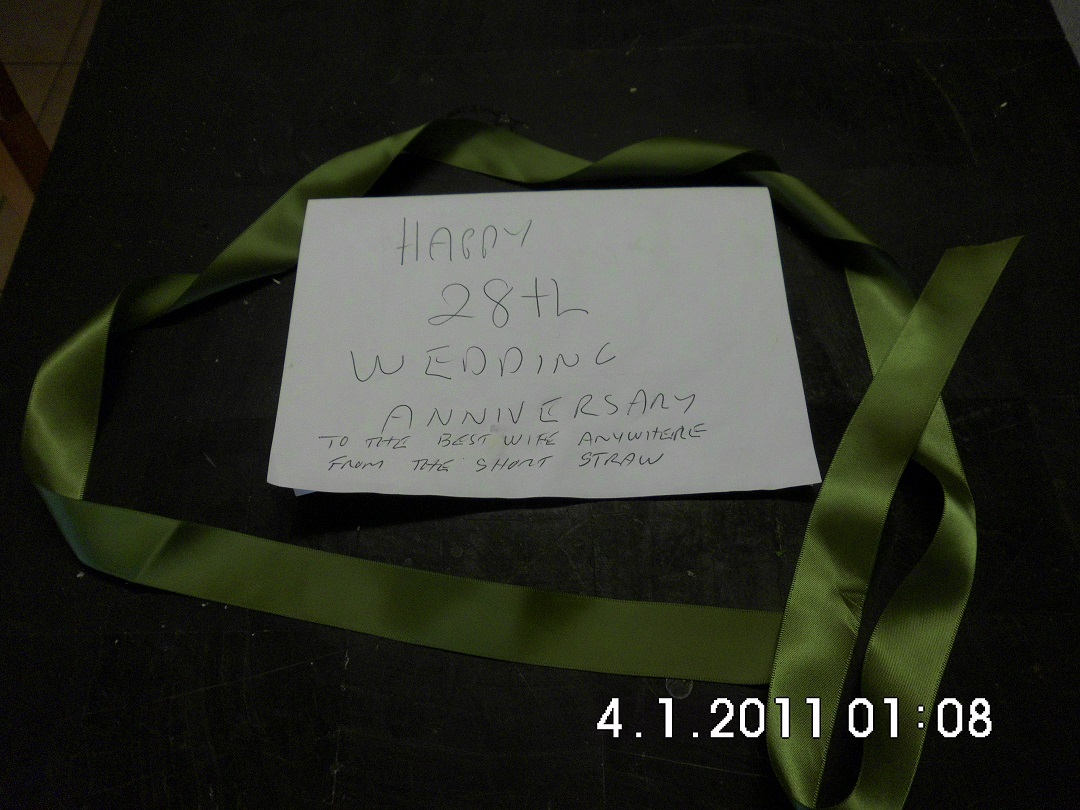
Some people might think that being Fathers Day and our 28th wedding anniversary that it might be a day of rest or celebration but not us. The celebration was held in the evening and although we tried not to rush around too much it proved to be a productive day with a little reading and even a quick nap.
The first one up gets to set up the decorations for the day

The day started extremely well with the water pumps on the dam started before coffee. On the walk back two bales of old Lucerne were put out for our three cattle. Martinique a 7 year old heifer named because she came from a dairy at Glen Martin. Warren and Hector two Friesian Angus cross steers named after the dairy farmer who donated them.

After coffee and blogging, the broken gate valve on the watering system was replaced. Then we both worked on the irrigation system for the Tomato bed. After laying out, securing it to the ground and installing all the spray nozzles a quick test to ensure all is working, a thorough clean of the filter and we were off.
Irrigation pipe installed.

Testing
Jean continued with a few loads of washing and changing the bed then went onto hand watering various pots and beds and incorporating some weeding. My list was all these odd little jobs.  The bees feeder needed refreshing with sugar and water which didn't take long. This is only being done to help increase the brood numbers. Then the following seeds needed to be set out into seed trays for later transplanting to the Tomato Bed i.e. that part set aside for vines or other than Tomatoes. Corn, Cucumber (3 types), Zucchini (2 types), Okra (2 types), Rockmelon (6 types), Watermelon (7 types), Dry Pumpkin and Bitter Melon.

Seed trays

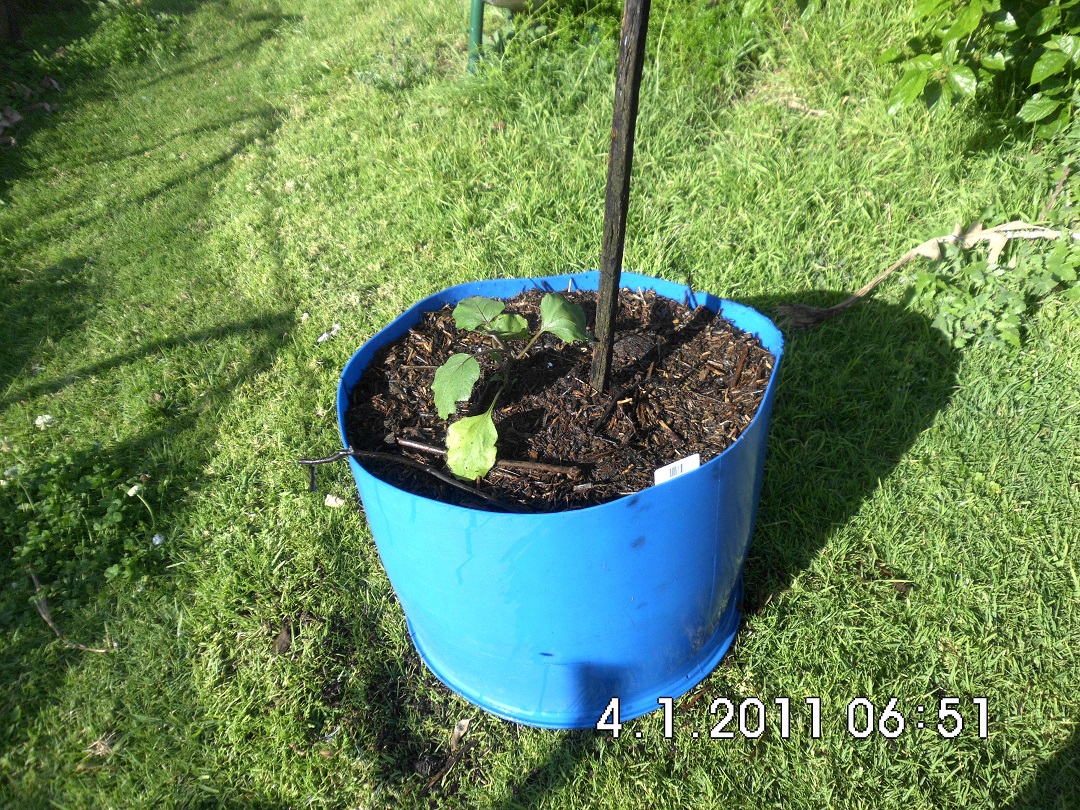
We had an Eggplant which was planted last Summer into a pot. It did really well and also stayed on through Winter and is flowering and setting fruit again. On the strength of that we repeated the trial with another variety and also are trialling some Capsicum done in pots. It maybe the rich compost or the depth of the pot or just the fact that being near the house it didn't experience the cold as much. We shall see. With the two of us on this task it didn't take very long to fill, plant and water five pots. All those big composts we made over Autumn and Winter are coming in very handy.

Last year's Eggplant doing well after Winter

Trialling a new one

One of four Capsicums done in the same way

Last jobs of the day included mulching the various Onion plantings with fine Lucerne hay that had been processed through the mulcher. This little job had been sitting around for two weeks. Any longer and we would have had to weed the beds again. The bed (in the house that is) was re-made and vegetables picked from the garden for dinner. A quick shower and Champagne was opened at 6 pm and washed down a selection of home made cheeses. Happy Anniversary!