Search This Blog

Friday, September 6, 2013

Tomatoes, Pumps, Cattle and things

Our cattle were moved this morning into a fresh cell in what is known as the Big Dam Paddock. They should get about 2-3 days of green pick before needing to be fed with the new Lucerne. They really appreciated the change of cell. Heads down and eating immediately especially the green growth around the water's edge.

Warren and Hector munching on reeds. The two boys are never too far away from each other.
While down at the dam the two pumps were started. All the vegetable beds get a light water every day to maintain moisture. The grapes are in bud burst and flowering and they received their weekly drink. Rain appears to be very far away possibly some decent showers in October but who knows. Honda engines are the most amazing pieces of engineering. The oldest we own is nearly 20 years old and still starts first pull. It does blow a lot of smoke at first but just keeps going. The oil needs topping up most times but that's a minor inconvenience. The wonderful thing about these piston pumps which the engines drive is the reliability, indestructability and ease of maintenance. It takes less than 15 minutes to replace the leather cups which gradually wear out usually one set per pump per year sometimes less.

The 20 year old 5 HP Honda engine

The dynamic duo in operation
The vibrating intake pipes show if the pumps are working ok. That is smoke not mist as the oldest Honda warms up.

An indication of dryness is the falling dam level. It is down just under a metre after the driest few months of the year.

Difficult to see but this is the receding shoreline.
The Tomato bed progresses. The three tiers of mesh have been erected and now its up to the Tomatoes to do their bit. All the vine mounds have their chicken litter piled on as well. A wonderfully productive day.

Trellising Complete
Jean went out to Karuah and picked up some oysters. They didn't have any Sydney Rock ready and we ended up with Pacific. These are fine and easier to open but I can see why everyone raves about the Sydney Rock Oyster. There is a huge difference in flavour and texture. Either way we received a good dose of Zinc, Iron, Iodine and Omega 3. I'm sure there was some health benefit in the half bottle of Home Hill Farm Sparkling Semillon that we shared over the oysters.

Thursday, September 5, 2013

Tomato Planting Day

All bar two of the Tomato seedlings were planted out today a BD Fruit day.

Beefsteak
Health Kick
Roma
Kotlas Purple Cherokee
Palmwoods
Red Fig
Thai Pink Egg
Broad Ripple Currant
Black Russian
Kumato
Amory Orange
Jean Flame
Money Maker
Rouge de Marmande
Black Krim
Tigerella
Cherry

Jean was feeling the heat and being tired commented on the amount of work involved. The only response is "why are we planting so many more Tomatoes than we can possibly eat?" To which I got "well we certainly give it a good shot and I like some variety". Being a promising year we should get an early start to the harvest which will be a month before most people in this area. As usual there will be plenty of give aways  to friends and neighbours.

TIP: After each seedling is planted we pull off about half the foliage. This reduces the transplant shock especially on a warm day. The other alternative is to shade each seedling with an upturned pot to reduce the light during the day for a few days.

1/3 foliage removed to prevent wilting


Also planted were the remainder of the Capsicum seedlings. Some in the Tomato bed and some in mounds. Everything was watered in well with Seasol.

Capsicum on its mound


Progress was made in the completion of this Summer bed. All the planned mounds had composted cow manure added and some which were needed for Capsicums had the chicken litter added and were covered with mulch hay. The full length of the irrigation pipe was installed and tested and more weed mat added. Slowly the entire bed is nearing completion. Only a bit more weed mat to separate the mounds, Chicken litter on the mounds, the three tiered trellis over the Tomatoes and finally the protective electric fence.

Progress on the mounds


There are 30 mounds for vines and other. Sometimes out of laziness we have put more than one vine into a mound but this year we will not as only enough seeds have been planted to match the number of mounds - some discipline at last.

When planning the Tomato season we  planted an extra couple of seeds of each variety just in case there was not 100% germination. Well there was 100% germination and now we are looking for a home for a large number of good sized seedlings. Some neighbours are going to get a surprise.

The first Artichoke of Spring peeping out

Wednesday, September 4, 2013

A Dry Time of Year and Being Prepared

One of the ongoing tasks needing to be addressed is the state of preparedness. When things go wrong it's no good throwing hands in the air and not having a solution. In bushfire season it is the state of readiness and a plan. For a power outage there must be a plan. In dry weather water is needed and feed for the animals. It is very dry and has been since July when we had 35 mm in total. August had 2.5 mm.

In the water area the plan was implemented when we purchased  the property. It was not on town water or alongside a permanent water source. With the aid of two D5 bulldozers and a government department a 7 mega litre dam was installed. Two piston pumps with petrol motors (one for redundancy) push water up to a 20,000 litre holding tank where it can be distributed to garden, trees and water troughs with a pressure system. Theoretically there is enough water for 6 months should it not rain for that period.

There has been very little regrowth and the three cattle are a bit whingy because the quality of feed is poor i.e. plenty of roughage but a bit woody and hard work. We had about 30 bales of old Bio Dynamic Lucerne in the hayshed. It was a bit rat eaten and the last time it was offered to the cattle they ignored it. The Lucerne was purchased some years ago and successive  good seasons meant we never fed much of it out. In fact as it was getting old we had used some for mulch.

At the beginning of the week it was offered again and they wolfed it down. They are still in good condition and just in case the rain stays away we don't want them to lose condition as it is always hard to recover. Because of the age and quality of the BD hay between 2 and 4 bales are being put out each day.

Always having a supply of feed hay on hand is an important part of being prepared or eventualities. There is a balance between having too much and too little. The decision was to refresh stocks and try and get two months supply (based on a bale a day) at the current price and then be prepared to pay a premium after that if it ran out. Some freshly made high quality Lucerne would improve their nutrition until some rain arrives.

Made  contact with a farm at Singleton which makes hay on a large scale. They had 6000 in stock and this last 12 months had baled 45,000. "Come any time". Two levels of quality $11 and $12. We chose the $11 quality. Arrived just before lunch to find three men loading a ute and horse trailer. We gave them a hand and then it was out turn.  Not being sure how many would fit on the trailer and ute it was a simple matter of saying how much cash we had with us and loading until money or space ran out.

The money ran out at 68 bales. Well that's what appeared to be the case. There had be some confusion and instead of loading $11 bales they had supplied $12 bales. Since it was not tied down at that point it would be easy enough to off load some until we matched our cash.

"Don't worry about it, take it at $11."
"Are you sure, we don't mind unloading and putting it back in the shed."
"It's fine, leave it on"

Farmers are funny people. Hard working and frugal, tough as nails and yet generous when you least expect it. Its a good day when you meet good people.

68 Bales of Lucerne, ignore the date stamp on the photo it is incorrect.

Tuesday, September 3, 2013

Tomato Bed - More Progress

Finally getting back to the Tomato Bed. Well really it should be called the Spring/Summer/Autumn bed or the Tomato/Melon/Cucurbit/Corn/Okra bed. I'll just stick to the Tomato Bed.

The next stage is to lay out weed mat. I hate weed mat when it has to be removed or when it gets old and straggly but nothing beats it for keeping the grass down for a few months while the vines from the melons, pumpkins and Cucumbers mature. For a few years we tried a thick layer of mulch hay but just could not make it work successfully. It works on the Tomatoes because by the time the weeds start to pop through the Tomatoes are so thick with foliage they shade out the weeds.

The Tomatoes are ready to plant and Thursday will be the big day according to the Bio Dynamic Calendar. The vines seeds are in seed trays and so we have plenty of time to finish their beds before they are ready. Sometimes we have planted the seeds directly into the mounds but for an early germination the cold frame is best.

In this initial step of the vine beds we pick a non windy day and lay out the really long pieces of weed mat. After the first two long sections were down in went the irrigation pipe. The elevated spray nozzles are put in existing holes at appropriate spacing. This first row will be Zucchini, Cucumber, left over Capsicum plants and some vertical growing vines such as Bitter Melon. The mounds are closer together as they need less space. While still accessible by tractor the first layer of composted Cow manure is put down. The chicken litter will be carried in by hand later because we are not ready to collect it just yet.

The third panel of weed mat is put down and the irrigation pipe installed but the spacing of spray nozzles is further apart as this row will have Rockmelon and Water Melon.

At this stage the weed mat is held down with strategically placed soft wood logs, when we run out of these we will used old tyres. Tyres are ok but they do have the habit of harbouring serpents. The soft wood is treated pine and reasonably light. Not something we would normally have our property but...

These logs are leftover scrap removed from our house when it was modified 15 years ago. Unfortunately our house is made from treated pine logs. It was  an ugly log cabin and the logs are  now entombed inside with Gyprock lining and outside with fibre cement sheeting and cement render.

There is still another row of weed mat and irrigation pipe to go and smaller weed mat offcuts will go in between the mounds, Slowly we are getting there.


Monday, September 2, 2013

Work

Very little progress at home today. Started up both pumps on the dam and watered most of the garden beds again. Gave the pots a good drink as well. Made up some small trays of seed mix and put in three types of beans - Climbing Rattlesnake, Yellow Bush and an Asian climber which tasted good last year. The Rattlesnake is our favourite. 3-6 plants keep us in abundance for months. Not only does it produce prolifically but the beans can be eaten at all stages of maturity and are still tender. As it gets to the end of life the vine produces poorer quality beans as it runs out of soil nutrition but by then you have had more beans than you want.

Pretty much the entire day was spent over the river hauling silage from another property. This silage is made from Ryegrass and won't be ready for 6 weeks as it was just baled but it is very rich feed quality. It could be fed out now but in 6 weeks after it has fermented it will be even better. The round trip with ute and trailer takes about an hour including unloading for two bales. Originally the plan had been to do one trip each day but we decided to bite the bullet and get it over with. It worked out well for the farmers supplying the silage as they were at home baling another paddock and the tractor with the bale handler was ready and waiting.

The disc harrows that were on loan to the property over the river needed a new disc. One which had a crack snapped off over the weekend. Fortunately it was an outer disc and only took a few minutes to remove. A replacement is  now on  order. The missing part has disappeared in the soil somewhere.

The weaners have finished strip feeding the Oats and are now on rougher feed and silage and not very happy about it. A lot of standing around and looking longingly. They will have to put up with what they have for a couple more weeks until some other paddocks have responded to the warm weather.

The cows and calves are in a similar situation as we run out of good quality green feed. They have eaten the last two bales of Ryegrass silage which they devoured quickly and are now back to Kikuyu silage for a couple of weeks. Some of the better paddocks have been irrigated and fertilised and are looking good. Just a couple more weeks and all will be well.

All but 6 cows have calved with two new babies at the weekend. At least one of those 6 doesn't look in calf. In a couple of weeks the two herds will be merged again and paddock management will be simplified.

Looking forward to some rain, green feed and less time managing multiple herds. Feeding out silage to three herds and moving the irrigator twice daily id very time consuming. Wonderful when nature does it all for you.

Tomato Bed Next step, Spring Plantings

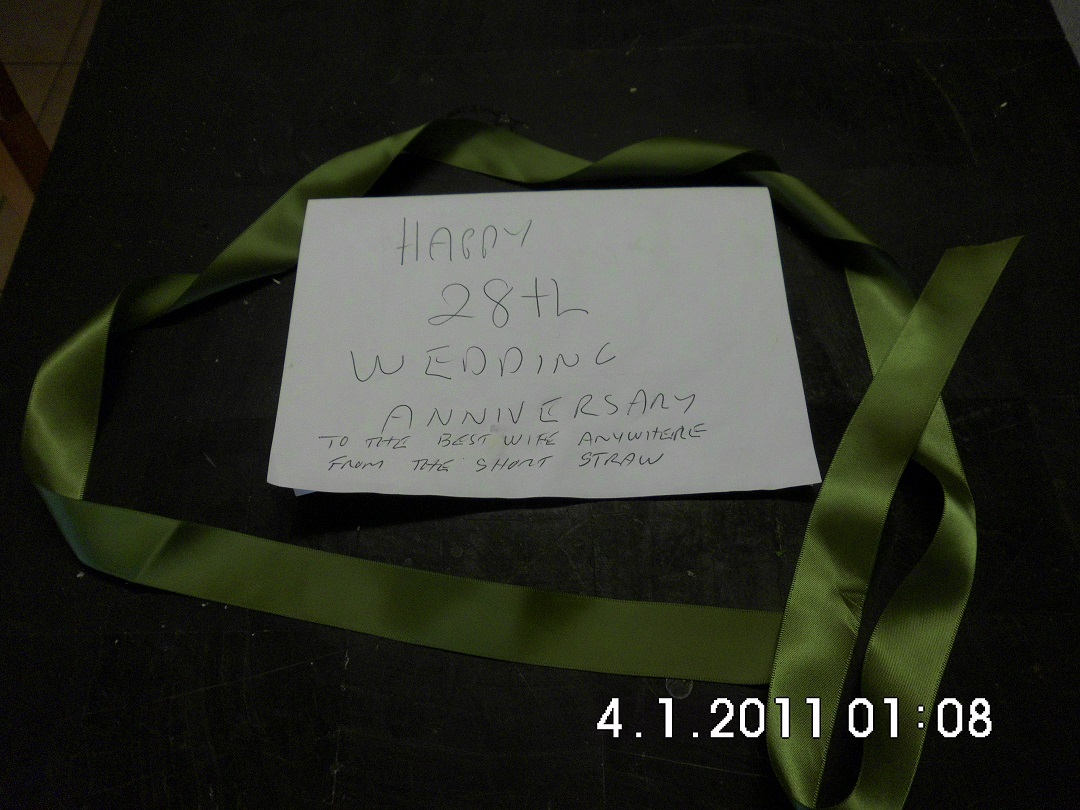
Some people might think that being Fathers Day and our 28th wedding anniversary that it might be a day of rest or celebration but not us. The celebration was held in the evening and although we tried not to rush around too much it proved to be a productive day with a little reading and even a quick nap.
The first one up gets to set up the decorations for the day

The day started extremely well with the water pumps on the dam started before coffee. On the walk back two bales of old Lucerne were put out for our three cattle. Martinique a 7 year old heifer named because she came from a dairy at Glen Martin. Warren and Hector two Friesian Angus cross steers named after the dairy farmer who donated them.

After coffee and blogging, the broken gate valve on the watering system was replaced. Then we both worked on the irrigation system for the Tomato bed. After laying out, securing it to the ground and installing all the spray nozzles a quick test to ensure all is working, a thorough clean of the filter and we were off.
Irrigation pipe installed.

Testing
Jean continued with a few loads of washing and changing the bed then went onto hand watering various pots and beds and incorporating some weeding. My list was all these odd little jobs.  The bees feeder needed refreshing with sugar and water which didn't take long. This is only being done to help increase the brood numbers. Then the following seeds needed to be set out into seed trays for later transplanting to the Tomato Bed i.e. that part set aside for vines or other than Tomatoes. Corn, Cucumber (3 types), Zucchini (2 types), Okra (2 types), Rockmelon (6 types), Watermelon (7 types), Dry Pumpkin and Bitter Melon.

Seed trays

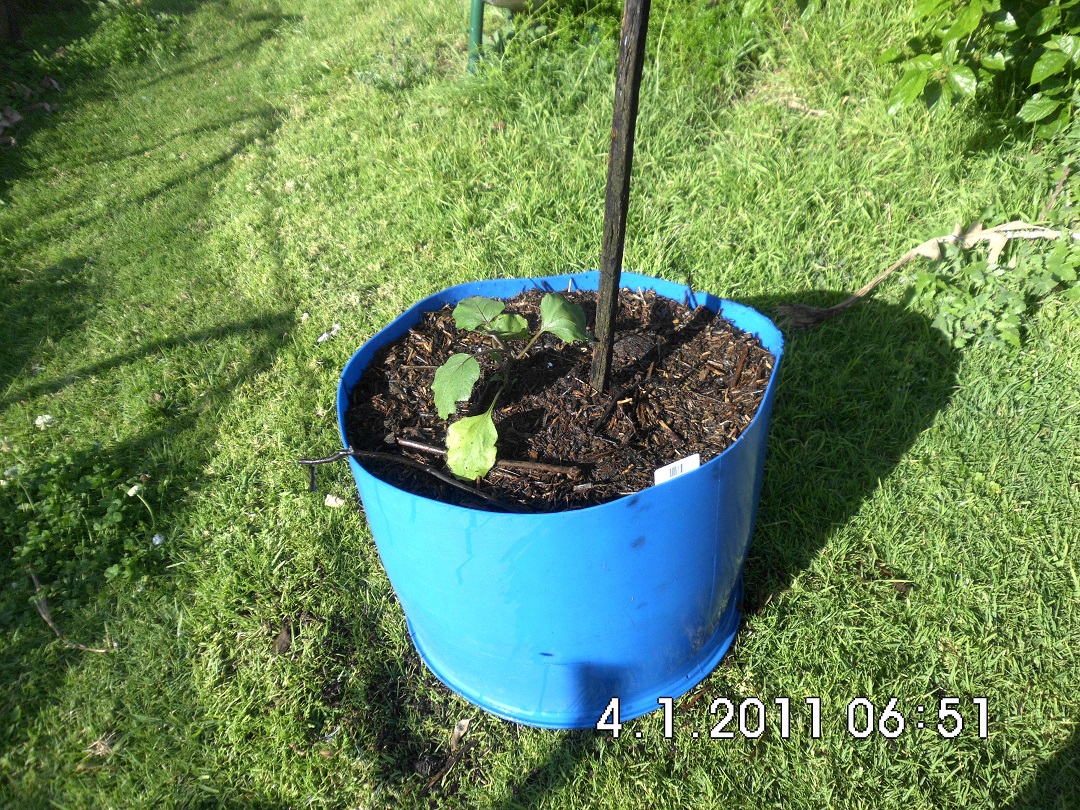
We had an Eggplant which was planted last Summer into a pot. It did really well and also stayed on through Winter and is flowering and setting fruit again. On the strength of that we repeated the trial with another variety and also are trialling some Capsicum done in pots. It maybe the rich compost or the depth of the pot or just the fact that being near the house it didn't experience the cold as much. We shall see. With the two of us on this task it didn't take very long to fill, plant and water five pots. All those big composts we made over Autumn and Winter are coming in very handy.

Last year's Eggplant doing well after Winter

Trialling a new one

One of four Capsicums done in the same way

Last jobs of the day included mulching the various Onion plantings with fine Lucerne hay that had been processed through the mulcher. This little job had been sitting around for two weeks. Any longer and we would have had to weed the beds again. The bed (in the house that is) was re-made and vegetables picked from the garden for dinner. A quick shower and Champagne was opened at 6 pm and washed down a selection of home made cheeses. Happy Anniversary!


Sunday, September 1, 2013

Slowly Making Some Progress...

Being Saturday and the last day of August means that the Raymond Terrace Aldi store will open at 8.30 am with a broad selection of vegetable seedlings which are both well priced and well advanced. Having built up their reputation for supplying good seedlings it is important to arrive early to fight off the crowd of enthusiastic customers before all the goodies disappear. So we did arrive early and collected the few items that we have trouble germinating ourselves such as Eggplant and Capsicum and just because they looked so good picked up a few other things such as Dill, Basil and Lettuce and a couple of Tomatoes that weren't in our collection. There was a good crowd and lots of bustling to get to the Saturday specials but stocks were plentiful and no one disappointed.

Aldi Seedlings

This year the seedlings were very advanced which is OK for Tomatoes, Eggplant and Capsicum but makes things like Dill and basil a bit straggly. Still, all good fun.

This year our own seedling have been the best ever in terms of health and size. Could be the weather and possibly because they were potted up very early?

Our seedlings

The cosmic forces that govern the building of Tomato beds are obviously in a playful mood. Todays first disaster was the box trailer. It needs to be ready to haul some more silage and hay this coming week and it was noticed yesterday that the lights were inoperable. First eliminated the vehicle as the cause then dismantled the light fittings and cleaned all the connections - one loose bulb and one broken wire. Half the lights now working. Checked all the other fittings. This is all very difficult as the trailer lights are out of sight when working behind the vehicle. Mounted a vanity mirror on the ground. Aha the lights flicker when playing with the main connector. Stripped that down checked it all over and adjusted the connection points. Finally after an hour and a half all is functioning.

Now back to the planned job of the day i.e. Tomato bed. Spread a goodly amount of Dolomite to sweeten the bed and covered with a thick layer of mulch Hay - very thick. Hay bales come apart in different sized biscuits depending on the grass type and in this case woody long grasses resulted in biscuits well over 100mm thick. Fine that should keep weeds at bay for longer. The mulch hay was a special deal last year about a 120 bales at cost of production price of $2 from a friendly farmer. Enough to keep us in mulch hay for a  few years and at a price that means we can be generous with the application.

The next step 19 bales of mulch hay over 25 metres. The last 5 metres will be held back for succession planting.
This is what is left of a junior Red Belly Black snake near the old Tomato bed after a little slashing recently. Only just noticed it.
The mock Roquefort made most recently was done in two different ways. One lot received no pressing, was brine salted and not wrapped in foil. It came out creamy and soft after only a few weeks. The other had been pressed lightly and was rubbed with salt in two stages with the salt calculated on the current weight of each round. The rounds were pierced after the salt was absorbed and wrapped in special cheese foil. This has taken longer to mature. Although creamy it is firmer and closer to the mouth feel of real Roquefort but not that airy, granular look. But progress is being made.

Just before dark we noticed the Viburnum hedge looking a bit sad. Just a simple matter of turning on the automatic watering system? No such luck, no water coming through. After a quick investigation the culprit was the gate valve back at the pump. There are three valves splitting the watering system into three sections to simplify leak tracking. This one has broken in the off position. Fortunately we were able to patch in a hose from a working section to the Viburnum system and provide them with a  drink. The valve replacement can be tomorrows emergency repair.

The shut off valves have proven a worthwhile addition to the watering system