Search This Blog

Monday, July 7, 2014

Silage - Handling Waste, Spoilage and Rejects

One of the problems with feeding out silage is the waste that results. If the quality is fantastic the girls will almost lick the feeder and the ground around the feeder as clean as a whistle. But generally they manage to drop bits around the feeder as they pull out their mouthful. Then they trample on the dropped product and if the ground is a bit wet it becomes a mess.

If it is poor quality they tend to be even more wasteful. So this is a good indicator of how well the silage was made.

In the past if the ground was a bit muddy the waste would be spread out in a light mulch to cover the bare dirt and some grass seed added helping the ground recover.

At the moment things are a bit dry and there is little ground damage. In addition this batch of silage is of variable quality and the waste in one particular case 90%. Rather than just leave it to rot down in a big pile it has been loaded on the ute and brought to HHF.

What you see in the photograph is just a portion of the waste from this past week. It is all that could fit on the ute in one load. Yet more to come.

Wasted Silage

So what to do with it all? I'm sure you can guess. More compost! The challenge will be to come up with innovative concoctions for the various layers needed to make a hot compost. This could mean a lot of hand mowing to get a balance of material.

If all the compost bins are filled, the backup plan is building a temporary compost bin using mulch hay bales. This could be a busy period at HHF. That is the problem when you don't wish to see all this wonderful plant food wasted.

Sunday, July 6, 2014

White Wine

The cooler temperatures in the evening provided a leaning towards a glass or red wine as opposed to white. Occasionally a beer as a precursor but unchilled just straight from the Cave, cool but not chilly cold. Refreshing fizz. Then this evening the palate felt like a white wine. Not chilled just (outside) room temperature at about that 17 degrees C. There is a cardboard box outside the back door with some sample wines from the cellar under the workshop. This saves a long walk in the cool evening.

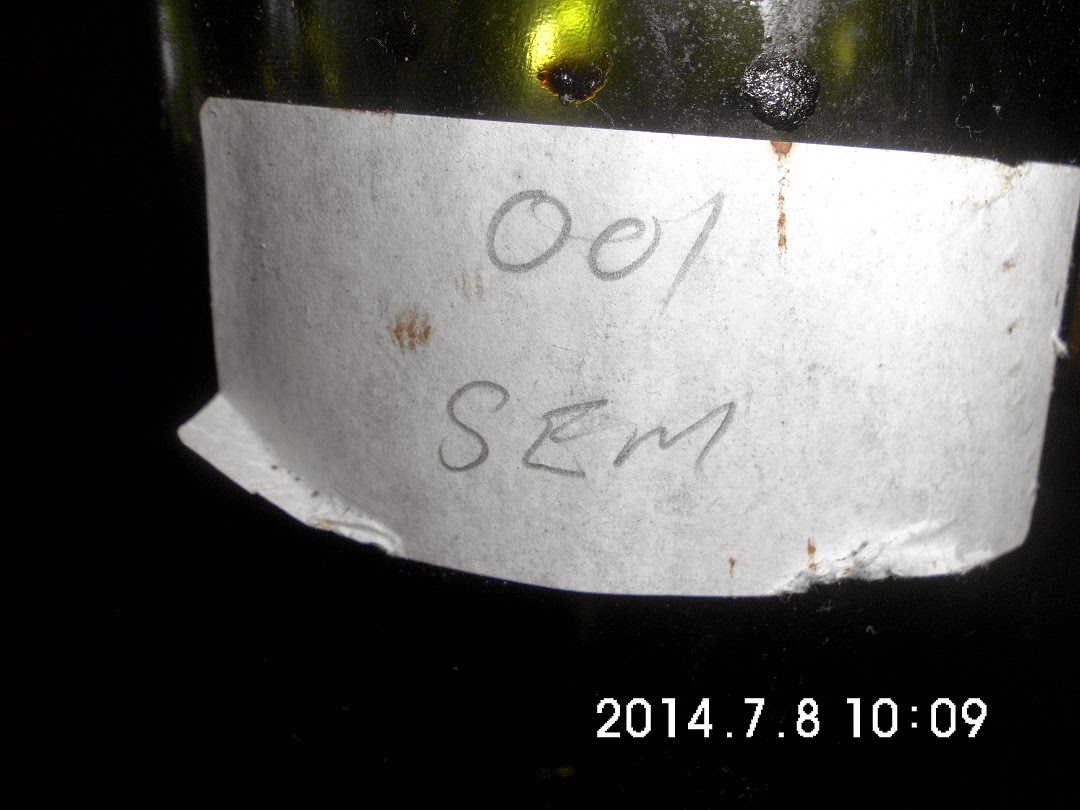
The only white in the box was "Sem 001". The HHF coding system means this is a Semillon 2010 batch 01. This bottle didn't have a screw cap but a cork which indicates it is from the last dozen of this batch. Every wine bottled here on HHF has one dozen under cork for long term aging and the rest under Stelvin Seal i.e. screw cap.

First impression was positive. There was no sediment despite being bottled unfiltered. So much for the commentators who say that bottling by the moon cycle is rubbish and wines need filtering.

Decanted the 750ml into a 375ml and a 185 ml leaving a single glass to enjoy. The nose was good, another promising sign. The first sip was unbelievable. This was an excellent wine, full of flavour and mouth feel. A tiny hint of those characteristics of a Hunter Semillon with a few years of bottle age. This is the point where you feel pretty pleased with yourself. All those past failures and mediocre results fade and you think only happy positive thoughts. It is worth the effort you say to yourself.

The excitement pulled Jean out of the other room and she investigated the wine in my glass. Colour: sparklingly clear with a hint of yellow, Nose: strange (not her strong point). Taste: "Wow, this is in the Didier Dagueneau league" (even if he did only use Sauvignon Blanc). So that was the end of the 2010 Semillon - we split the bottle. Just as well the entrĂ©e this evening was oysters.

The Wine


Sometimes when we pick the vineyard manager lets us have the box ends from the reserve block. But since this wasn't recorded in the vintage book we will never know if this was a factor.

Definitely, the lack of filtering adds more character. This is apparent in all the wines at HHF.

The Baume was 11.2 giving an alcohol level of 11.7. A bit higher than the usual 10.5 recommended for Hunter aged Semillons.

The pH was 3.24 which is about perfect.

The grapes after picking were chilled on skins for 18 hours then pressed and the temperature raised for yeast inoculation. New World Strain Chardonnay Yeast was used. Once the must had commenced fermenting the temperature was lowered and remained between 10 and 15 C for 6 days until the only a third of the sugar was present. Every day the must was stirred to add a little oxygen for the yeast and to circulate the sediment. An obscure practice of some French winemakers.

The wine was racked and 5 grams/litre of French Medium Toast Oak chips added. A little higher than the book recommends but then it did have  a fair bit of skin contact.

And there it sat for 6 months until bottling. Occasionally tasted and now after 4 years it has blossomed.

Inspired again for another vintage.

Saturday, July 5, 2014

Some days can become unproductive

Some days are just that little bit different than others. Woke up at 2.30 am and couldn't go back to sleep.

An option was to lay there and hope that sleep would follow sometime. That's fine except when sleep finally arrives it's probably going to be 5 or 6 am and the plan was to get away early to get a little shopping done, pick up books at the library and a spare part for the garden pressure system which is misbehaving. Before leaving there were the cattle to feed, some yogurt to start draining, the curing beef needed its morning turning and attention and there was also some bills to pay. Some of these could be left until after our return but then you are running behind all day and feeling out of sorts.

The option elected was to hop out of bed, make a coffee, stoke the fire and get on with setting up the yogurt to drain, do all the work associated with the various meats under cure, write up all the cheques to settle outstanding accounts and relocate funds from one account to another, write the days blog, check and respond to emails, read a few blogs and news items and download a couple of podcasts. The Oats for our cattle are slow to sprout in the cold weather and despite 48 hours allowed for this phase the little white shoots are only just emerging. Brilliant idea is to move the bucket inside for the second 24 hours to near the fireplace.

By 6.30 am it's all done and feeling sleepy the head hits the pillow and Jean wakes me at 8 am. Feeling fine and knowing that a nap can be slipped into the agenda during the drive a shower refreshes and off we go.

All the jobs are done in Raymond Terrace which is amazingly quiet for a Saturday morning. It is assumed that school holidays have sent families elsewhere. From there it's a brief drive to Karuah with a nap on the way. The oysters are collected and a decision reached to have morning tea at the Greek restaurant just outside Karuah. This proves to be a good find. Home made biscuits and good coffee at reasonable prices and includes a pleasant chat to the owner.

Home leads to a second nap and then out to install the water pump on the dam that was sitting in the workshop repaired but unneeded until this lack of rain demanded some watering. While on a roll the pressure system is fixed and the ute unloaded, our cattle moved and watering commenced before its time to collect milk.

Over a home brew beer and Blue cheese the day seems to have been productive and deeply satisfying.

See what happens when you make good choices early in the day.

Friday, July 4, 2014

Cattle - Roaming Off the Property

No, not ours (this time).

Returning from an excursion to Dungog and travelling by the back route about 3 or 4 kilometres from home down in a sharp turning gulley stood a magnificent Black Braham Bull. Not old and age is hard to judge but lets say a 'youngin' probably just a yearling. Seemed nonplussed by our pause to examine.

This is where it's time to weigh up options. Keep driving and let someone else worry about the problem. Push it into the nearest paddock just to get it out of harm's way. Start looking for an owner and offer assistance.

When you think about it, what would you want someone to do with your strays?

Option three was about to become an adventure in sleuthing. Somewhere in the database of useless information laying dormant was a vague comment from someone years ago about a bloke called Stan Doftrees, who's property was within a 100 metres of where we sat, having some strange breed of cattle. Being a predominantly Bos Taurus region that could mean he has Bos Indicus and a home for this little bloke.

Up the drive and to the house for a bit of door banging before confronting a mature lady who admitted she was grandma and only visiting while Stan was away. Who's grandma was not divulged.

"There is a young Braham bull on the road nearby with a large Purple ear tag. Would that belong here?"

Never assume people know stuff so always provide two or more points of reference e.g. eartag colour.

"Oh dear I don't know if he has Brahimi cattle"

Now at this point you could correct the pronunciation but then what if  Brahimi is a new cross breed of some obscure origin.  Or she could also be referring to the chef of the same name. Best stay mum or grandmum in this case.

The problem is then shared with another current occupant of the house a generation younger. No relationship to grandma or Stan is provided but there is additional information is i.e. there is a Braham bull somewhere on the property but is grey. Which is an interesting comment as she refers to  the colour of the good looking dark Grey Staffordshire slobbering on my foot as being Blue.

The upshot of all this is that there is still no home but a suspicion that it may belong here and if all else fails this will be the temporary home i.e. option 2.

Back down the driveway to try another neighbour and as luck has it 50 metres on Mary Widdow is exiting her driveway on route to another location.

"Braham cattle? no don't know anyone who would own that but I'm just popping down to see Farmer Gate. I'll call a few people from there".

As Mary Widdow puddles off down the road past the happily munching Brahmin we decide to try another nearby neighbour. Con Tractor knows everyone but he may not be home. Being correct about him not being home wasn't helpful and neither was his gardener.

Consensus that we try another neighbour in the other direction before executing option 2. As chance would have it Ma Gee who lives opposite Stan Doftrees is arriving home and is idling in the drive about to open her gate.

"No, don't know anyone with Brahmins".

Well this looks bad, at least two of the people spoken with have been in the area for a decade or more and should have a fair idea of who has what. Beginning to wonder how far this boy has strayed.

The neighbour next to Stan Doftrees is who we target next. Good fortune smiles and he is exiting his driveway with son in tow.

"Mary Widdow just called me to say there was a Brahmin steer on the road".

"No, not a steer, a bull"

"Oh OK then that belongs to Stan Doftrees. Give me a hand getting him into a paddock?"

And so it passed. Job done. But is this an indication that nowadays we don't take an interest in our neighbours? Surely not. I've always said that Bos Indicus become invisible in a region of Bos Taurus. That would be the only explanation.

Wednesday, July 2, 2014

Artichokes, Turmeric, Ginger, Horseradish and Frost

Many years ago when Artichokes were planted we had mixed results and gave up after a couple of years. Then two years ago inspiration arrived and a new idea tried i.e. planting them in large pots or recycled 200 litre drum halves.  One of the other tricks to a good crop was planting out in July rather than the usual September. These combined ideas resulted in a huge success and the ideas was reused every year.

Today was the day for this task. All the  spare drums were emptied and then each drum refilled with a mix of the old soil and fresh compost. This consumed the entire contents of one of the compost bins. No wonder there is always a fresh compost being built at HHF. The place absorbs compost in barrow loads.

There is a mix of Artichoke plants this year. There are some purple tinged ones grown from seed called Violette  and a few plants divided from last years plants, also Violette which had produced offshoots. Jean's research also uncovered that the better variety for this climate was Green Globe. These were purchased a couple of weeks ago. Jean was careful to select pots that contained more than one seedling which resulted in paying for three and having 7 to plant.

Artichoke Pots

Empty Again


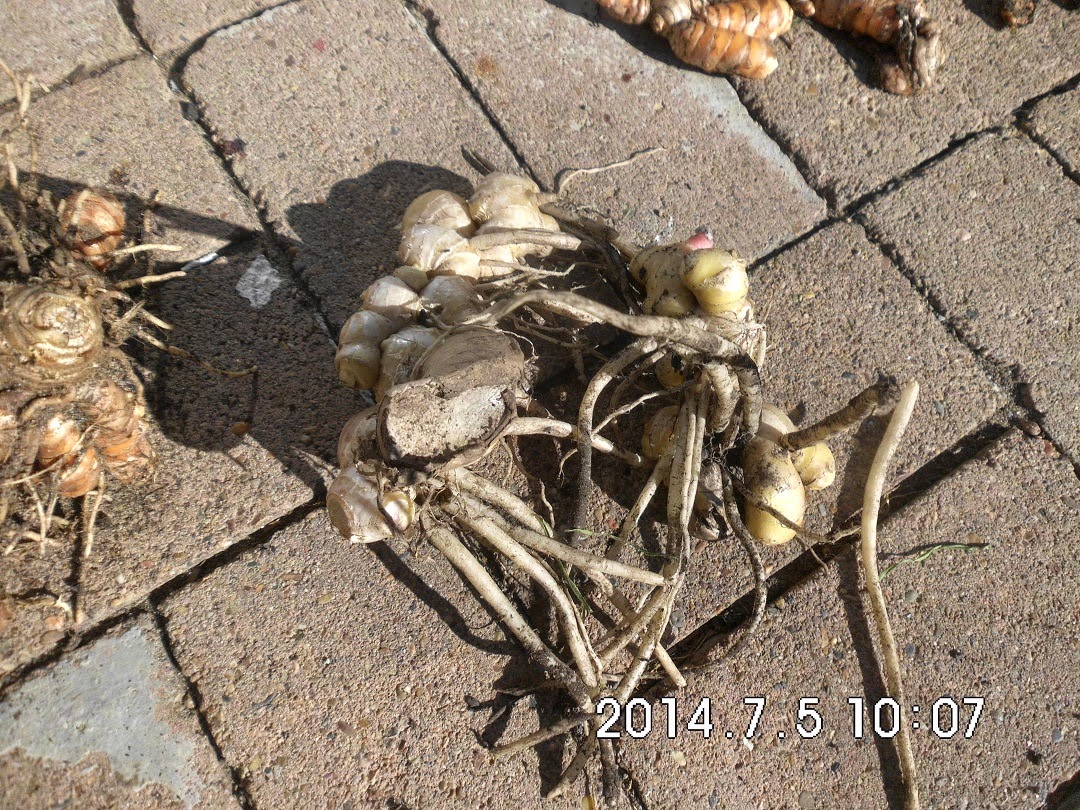
With that task successfully completed it was onto another exciting anticipation. The harvesting of Turmeric. Having planted two pots this time there was a mass of juicy roots to collect. A very satisfactory yield.

Turmeric

Drying Harvest

Ginger doesn't grow as well (or the formula for success hasn't been employed - yet). Anyway the first yield was a bit low but better than previous years which was nil.

Ginger

The  Horseradish pot was up ended to find a harvest of zilch. There were a few decayed strands of root. It seems something went wrong. Not knowing the cause all that can be done is purchase another plant and start again. A disappointment as fresh Horseradish sauce is so good on smoked Salmon.

There was our first frost of the year. Just barely visible on the new compost bin but easily felt underfoot. You know that slightly crunchy but slippery feel as you walk.

First Frost
And still there was time to sit with a cup of tea (no Scones, it's a fast day) and read a chapter or two from a current book with the Winter Sun warming our backs. This is the good life.

Making Compost - With Silage and Cow Manure

It can't be helped.  The cows across the river pull out mouthfuls from the silage feeder and always drop a bit on the ground. By the time the feeder is empty there is a solid ring of spoilt silage around the feeder. What a waste, but no it came home on the ute. Some years ago at a farm clearing sale a handful of tools were acquired which include three pitchforks in need of repair which was completed. It is now in use and it really makes loading easier.


An empty compost bin is an evil temptation and coupled with a ute load of spoilt silage and many bags of fresh manure it was all too much. It had to be built.


Two ute loads later it was all done in a few hours. The fastest compost in the east. Only one iffy bit is the uncertainty if fermented grass will heat up again. But if not at least the compost worms will digest the manure and grass. Can't lose.


Tuesday, July 1, 2014

Sawdust or Shavings for Chicken Run Mulch Part 2 Getting it Done

Yesterday there was the talk and today there was the action. Using a Gundaroo Tiller the compacted base of each run was loosened exposing worms and grubs and making the scratching a tad easier for the girls.


Loosening the compacted base

Close up

The next step was to spread the scoop of shavings about the run. As part of the process the chicken housing was cleaned and fresh shavings put into nests.

A few scoops of Dolomite were thrown around to sweeten the mix and finally a few bags of fresh cow manure added. This cow manure is impregnated with sprouted Oats which have not been digested by the cows. We started feeding sprouted Oats a few days ago and find the leftover seeds in the manure a real magnet for feathered creatures.


Sawdust and fresh cow manure

The girls wasted no time in getting to work

Finally, at feeding time that evening a few handfuls of chicken lollies were thrown about the run. Chicken lollies are whole Corn seeds.

Hopefully by the end of August the ingredients will be well mixed and broken down.